If you visit the nature center on these beautiful, sunny fall mornings, be sure to watch your step! The naturalists have been noticing lots of banded woolly bear caterpillars inching along the trails. Folklore says their fuzzy bands can foretell the winter. Let’s find out if that’s really true—and learn a little bit about these fascinating insects.
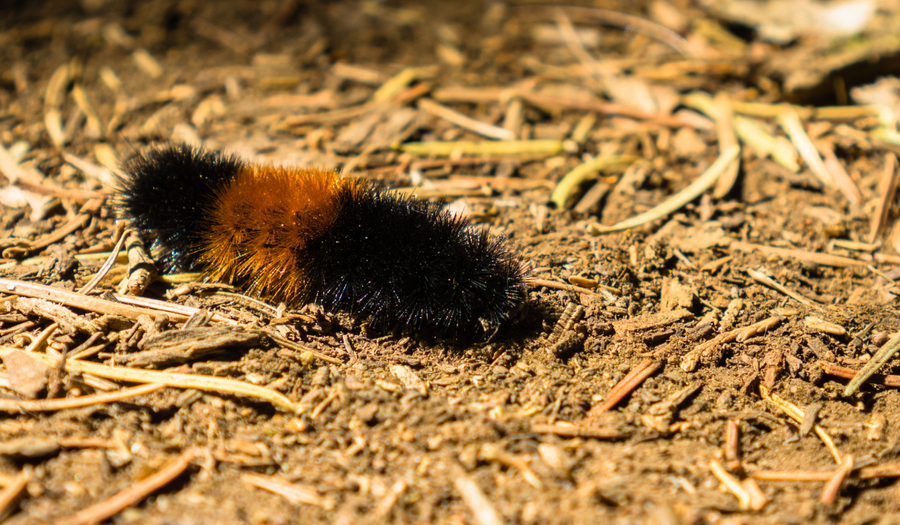
A woolly bear caterpillar inching along a dirt and pine needle covered trail.
These fuzzy, black-and-brown caterpillars are the larval form of the Isabella tiger moth, a pale tan moth that is fond of fluttering around outdoor lights at night.
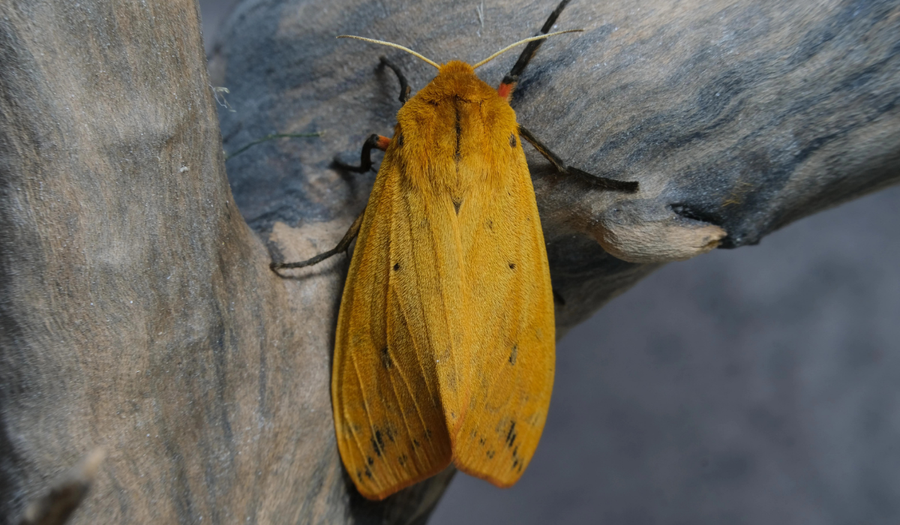
An Isabella tiger moth resting on a tree branch.
Woolly bears get their fuzzy appearance from tiny fibrous structures known as setae that cover their entire body. While these fibers do not contain venom, they can irritate sensitive skin if they break off, so it's best to handle these creatures gently (or leave them where they are).
If you do find yourself picking one up, don't be surprised if it rolls into a ball! Curling up is the woolly bear's instinctual response to disturbance.
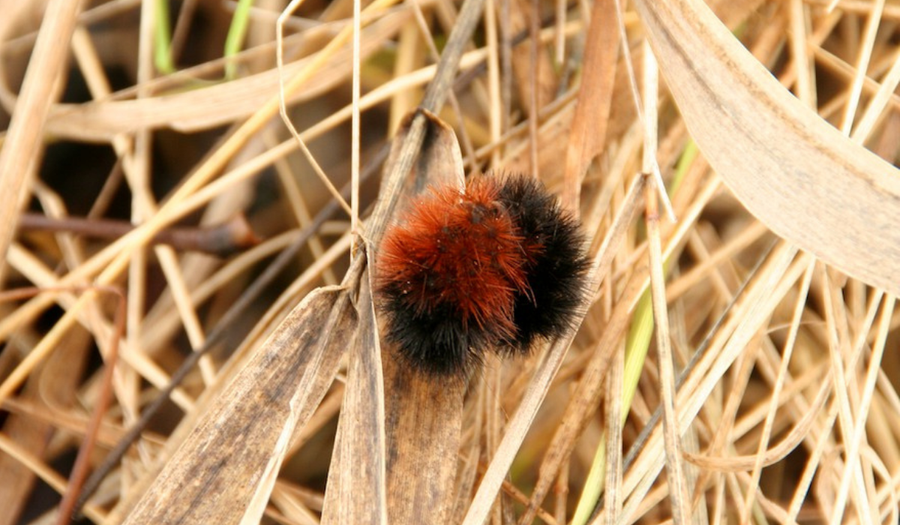
A woolly bear caterpillar curled up in a ball. They go into this circular defensive position when disturbed.
There's long been an old wives' tale that claims the size of the brown band on a woolly bear caterpillar can predict the severity of the upcoming winter. In reality, the width of these bands just indicates how old the caterpillar is. The older the woolly bear, the larger the brown band will be.
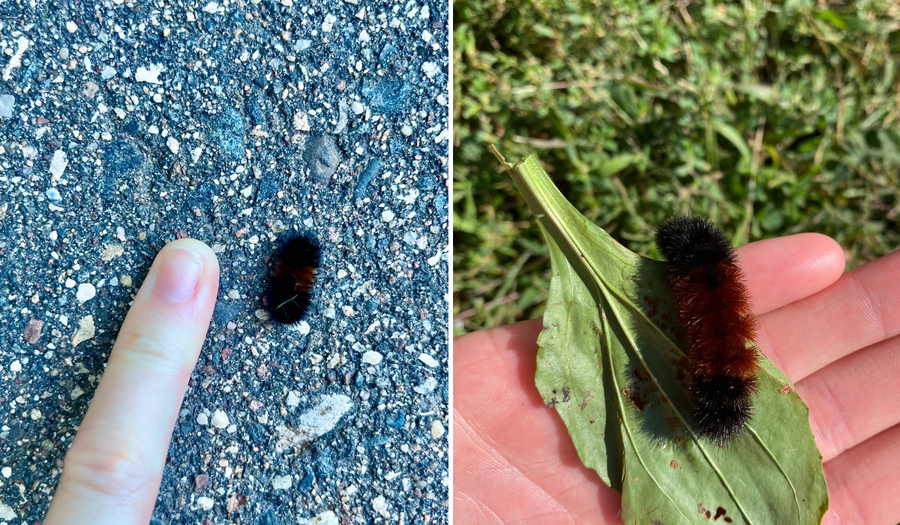
A younger and an older woolly bear caterpillar pictured side-by-side. Their brown bands indicate their age.
As the seasons shift from fall to winter, woolly bears seek refuge under leaf litter, so consider leaving some of those autumn leaves around your yard for them! Woolly bear caterpillars produce a substance called glycerol, which acts as a natural antifreeze and helps the caterpillars survive the cold Minnesota winter. In spring, they will spin a silky cocoon and pupate into adult moths, and the cycle of life continues.
While woolly bears won’t predict how many times you’ll need to shovel this winter, they are masters of survival. They remind us that even the smallest creatures have remarkable ways of weathering the seasons ahead.
Author: Naturalist Mary Dybvig
From the Trails is published monthly in our news & activities emails. Join our email list here.