Not all signs of fall are colorful or sweet. While fruits ripen, leaves turn autumnal shades, and wildlife prepares for winter, wasps too begin their seasonal shift. For people, that means more encounters with these insects that seem far less patient than they were in midsummer.
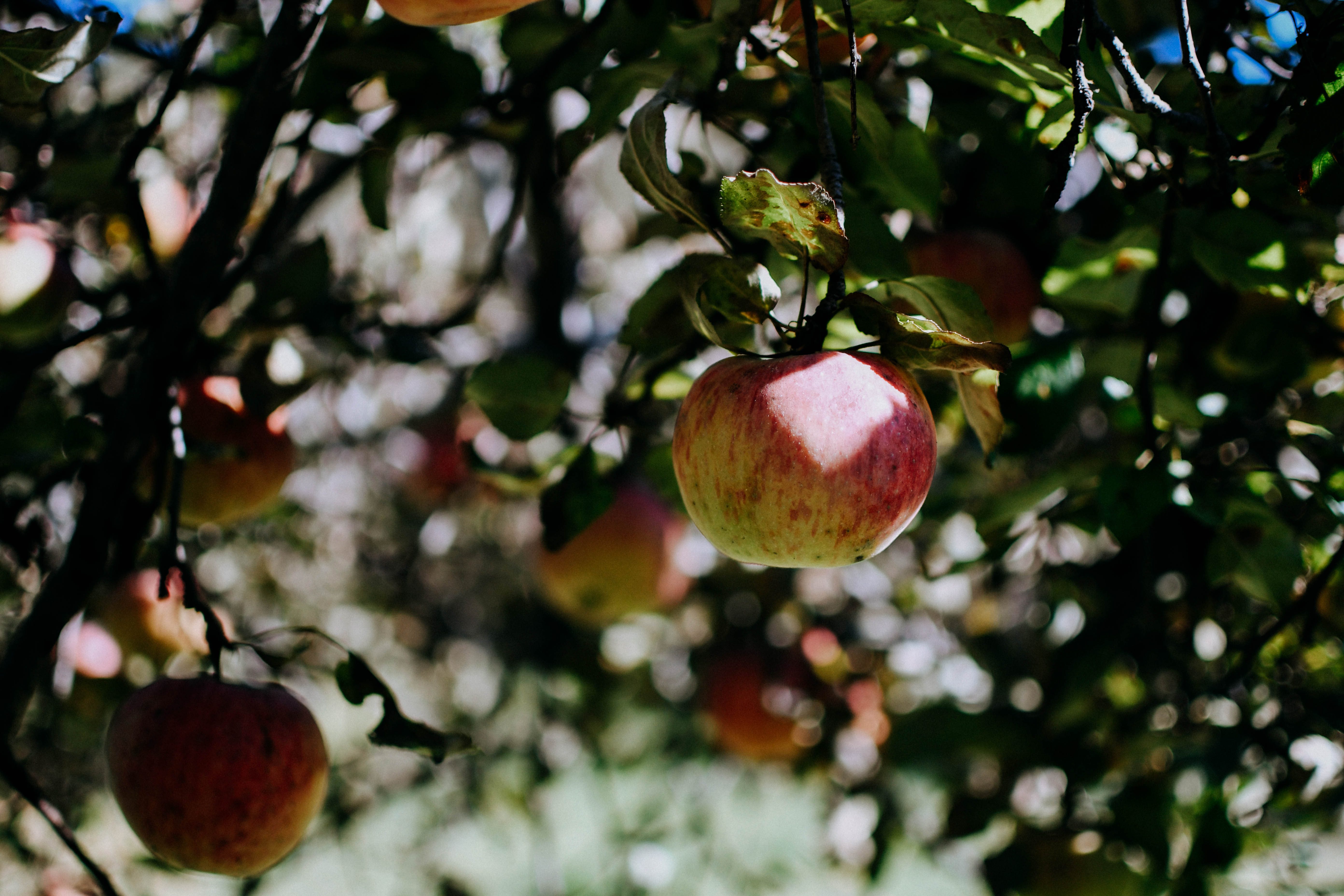
An apple ripe for picking in the orchard at Dodge Nature Center's Main Property in West St. Paul.
What explains the sudden shift in their behavior in fall? Why do they go from keeping to themselves in summer to being more aggressive now? It starts with their social structure.
Wasps, like bees and ants, live in colonies centered around a queen. Through the spring and summer, she lays eggs while workers and drones carry out her directions. By late summer, some of the eggs grow into new queens that leave the hive to find a safe place to hibernate.
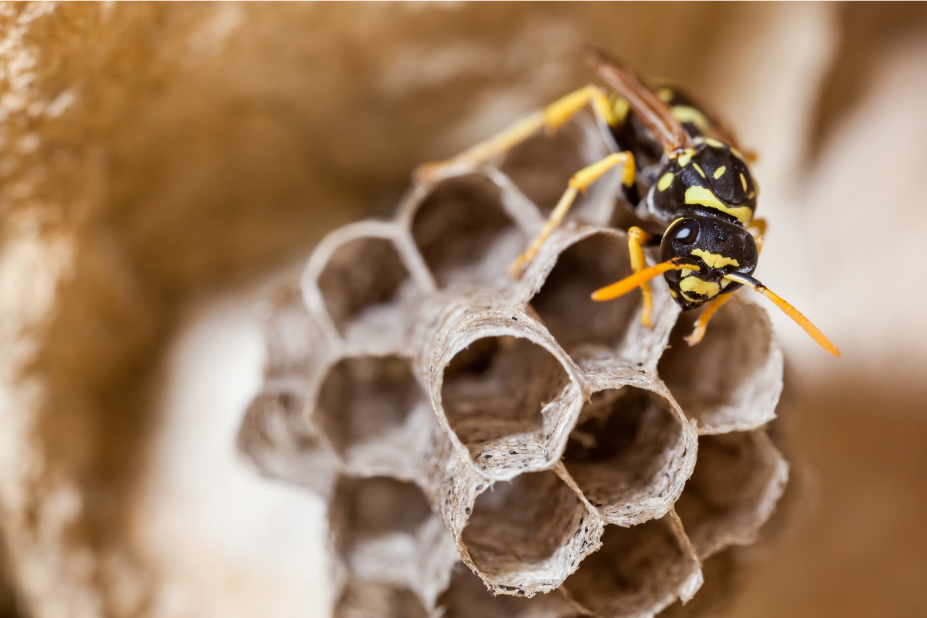
A paper wasp queen, one type of wasp commonly found in Minnesota.
With the original queen gone, the colony loses its “brain”, and the remaining wasps are left without direction. Combine that with dropping temperatures and dwindling food sources, and you have the recipe for crankier wasps.
Keep an eye out for another fascinating fall behavior: aggregating. This is when groups of female wasps cluster together to make it through cool nights.
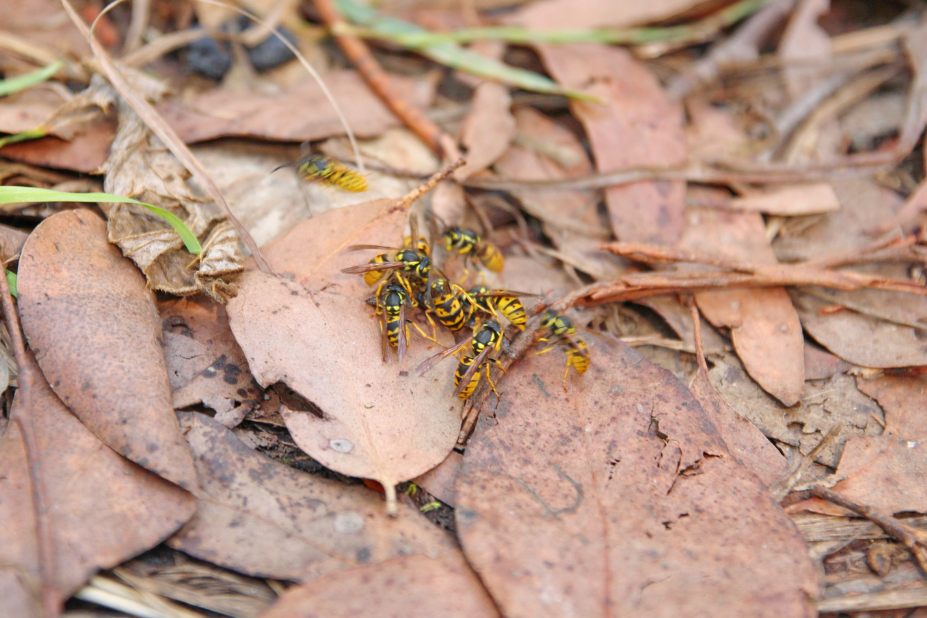
Wasps aggregating.
Not all wasps follow this pattern—many solitary and non-stinging wasps use other strategies to overwinter. But for the paper wasps and yellowjackets most common in Minnesota, this seasonal shift is just part of the cycle.
Author: Naturalist Michael Harrison
From the Trails is published monthly in our news & activities emails. Join our email list here.