Aah...it’s that time of year when winter is ending and spring is slowly arriving. Head outside and you might hear cardinals and chickadees singing their spring songs. Look up to see crows flying overhead carrying sticks as they begin nest-building. The sun is warm enough to not only melt snow, but to let you leave your heavy winter coat at home.
All these signs mean our favorite time of year has arrived at the nature center—maple syrup season!
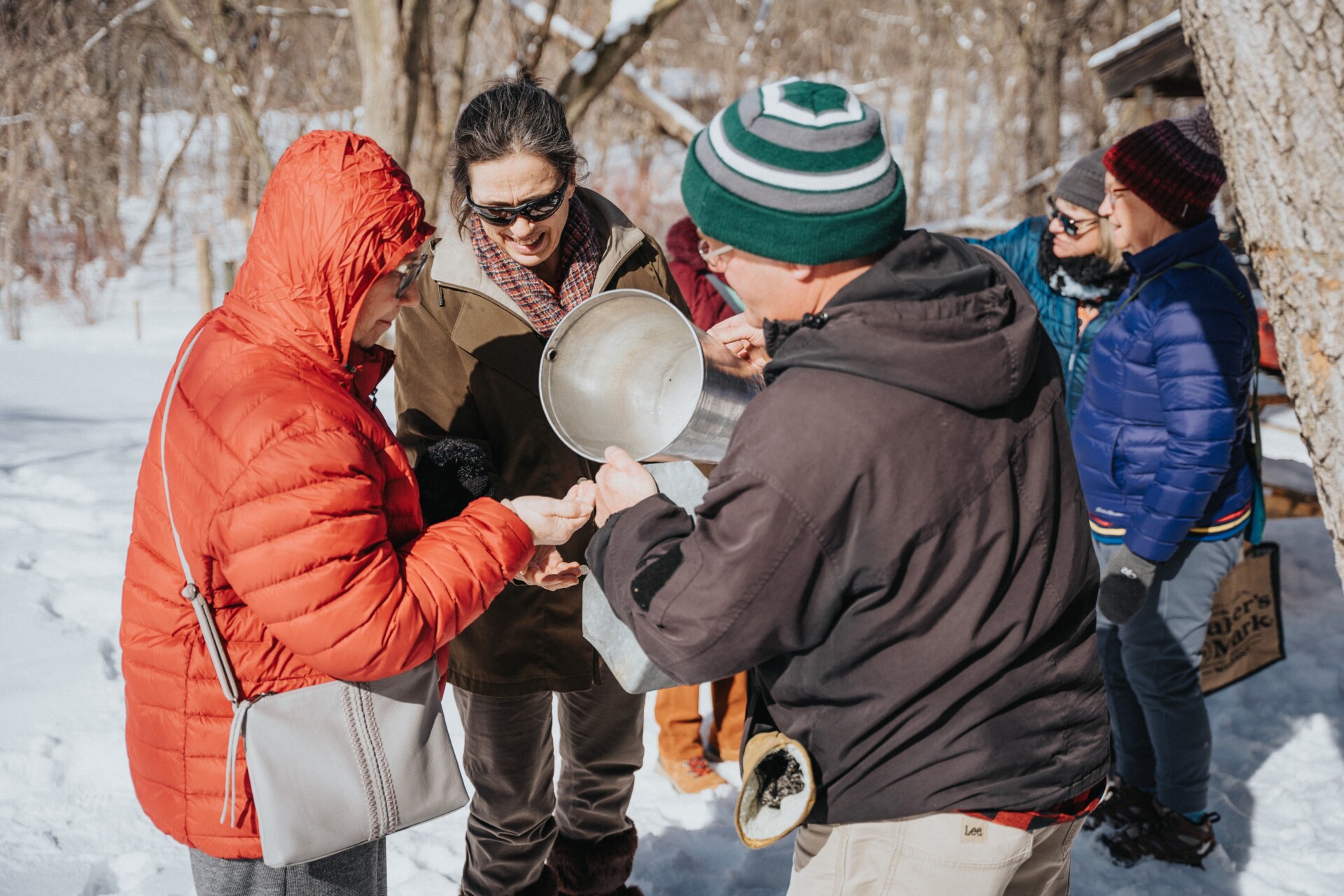
Naturalist Pete sharing small samples of maple sap at a maple syruping program. With an average sugar content of 1.5% or 3%, the sap is slightly sweet, but it becomes much tastier when boiled down into maple syrup!
The conditions have to be just right for this sweet tradition to begin.
When nights dip below freezing and days climb back above it, pressure builds inside maple trees, setting the sap in motion. By tapping a small hole into the tree, sap begins to flow. From there, it’s collected and boiled to remove excess water, concentrating the natural sugars into delicious, golden-brown syrup. Cook it down even further and the syrup becomes maple sugar.
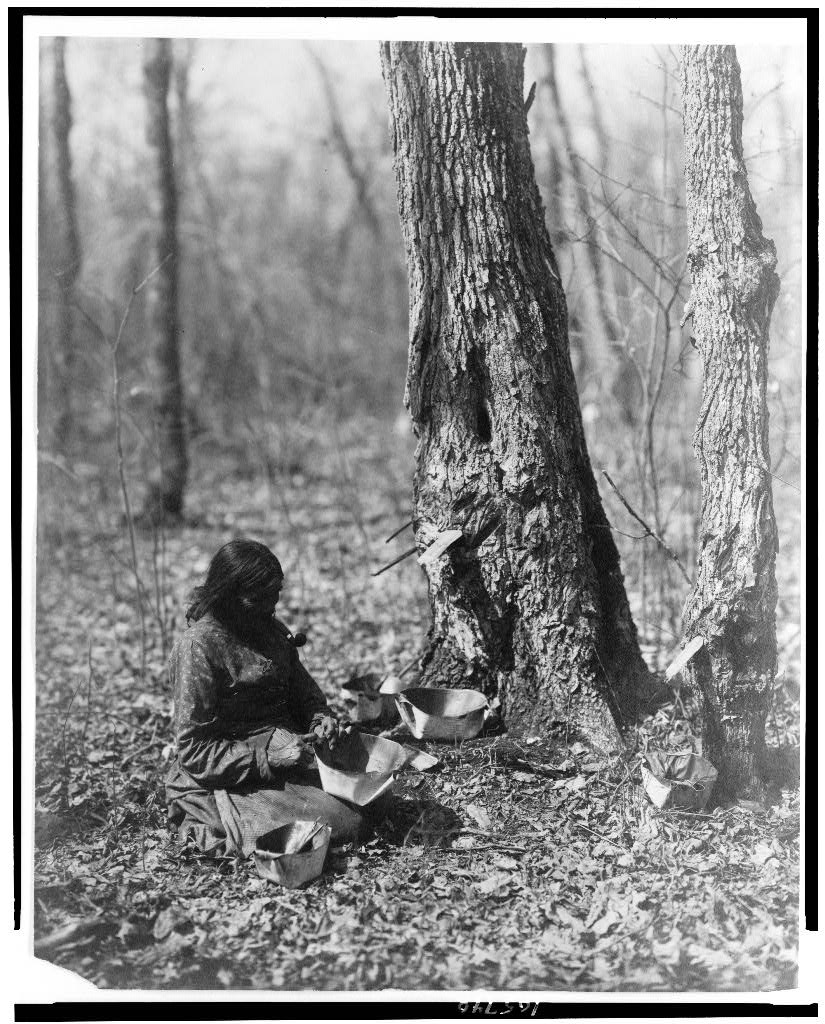
An Indigenous woman (year unknown) sitting next to a tapped tree, holding a small birchbasket. Before we had buckets and bags, these handmade baskets were used to collect maple sap. Photo credit: Library of Congress.
This centuries-old process was first practiced by Indigenous peoples of Canada, the Northeast, and around the Great Lakes.
Much like today, a variety of tools and techniques were used to transform sap into syrup and sugar.
- Maple tree bark was carefully slashed to release the sap. To help direct the flow away from the trunk, small branches of slippery elm or cedar were split in half and carved with a channel down the center. These early spiles were then tapped into the slits in the bark.
- To collect the dripping sap, small birchbark baskets were placed on the ground below the spiles. The sap was collected and placed in larger baskets made of green birchbark, where it could be boiled to evaporate the water. Some Indigenous cultures used clay pottery for boiling.
- Maple sugar was created by pouring syrup into hollowed out logs and vigorously stirring until it dried and crystallized. The process required strength and endurance, but the finished sugar stored easily in baskets and could last for months.
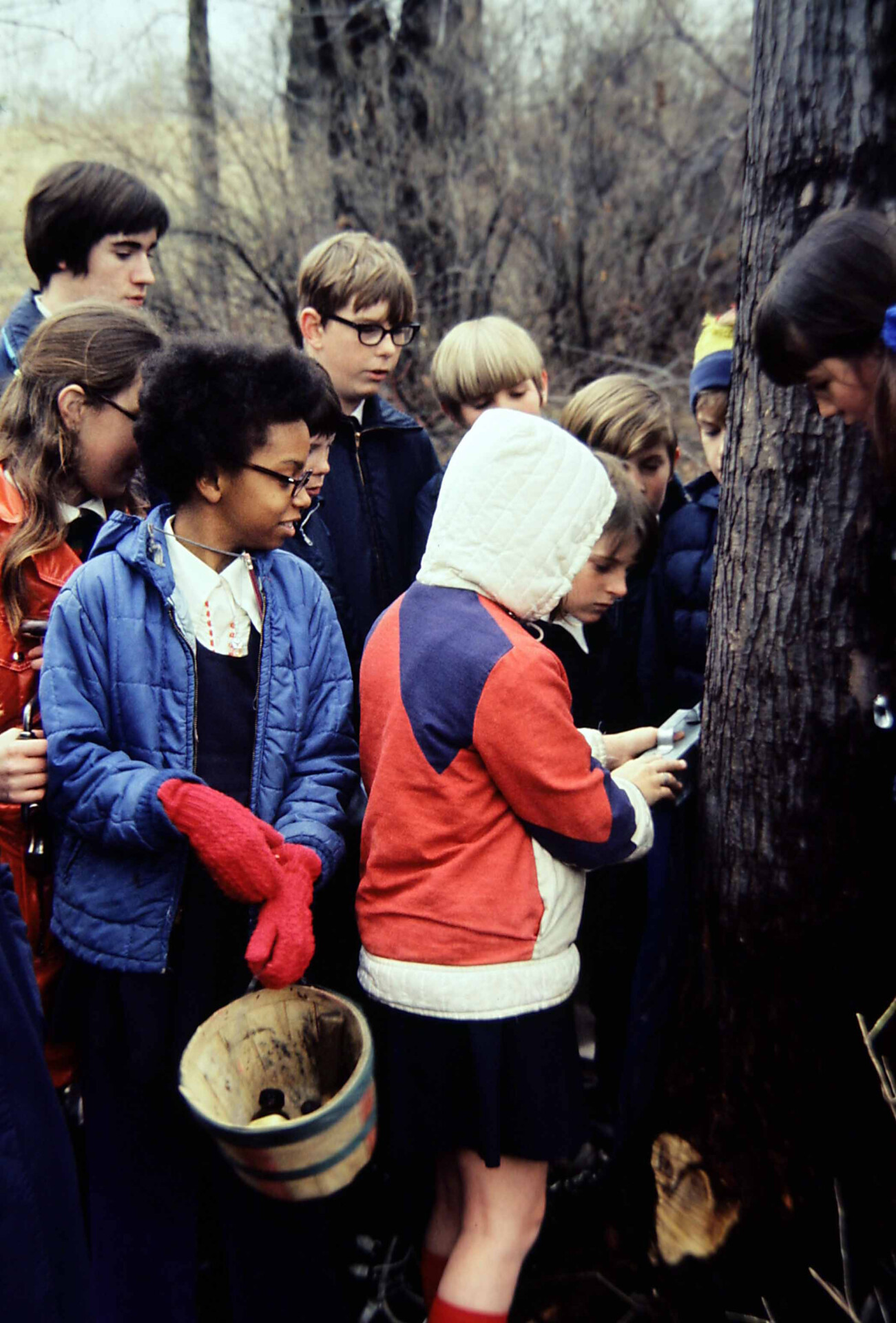
A group of field trip students at Dodge Nature Center (circa 1970s) tapping a maple tree and hanging a collection bag. Maple syruping has long been taught at Dodge and continues to this day!
When European explorers and settlers arrived, the Indigenous peoples began trading maple sugar for metal goods and other supplies. They generously shared their knowledge of syruping and sugaring, laying the foundation for the traditions many of us continue today. That spirit of shared learning remains at the heart of maple season.
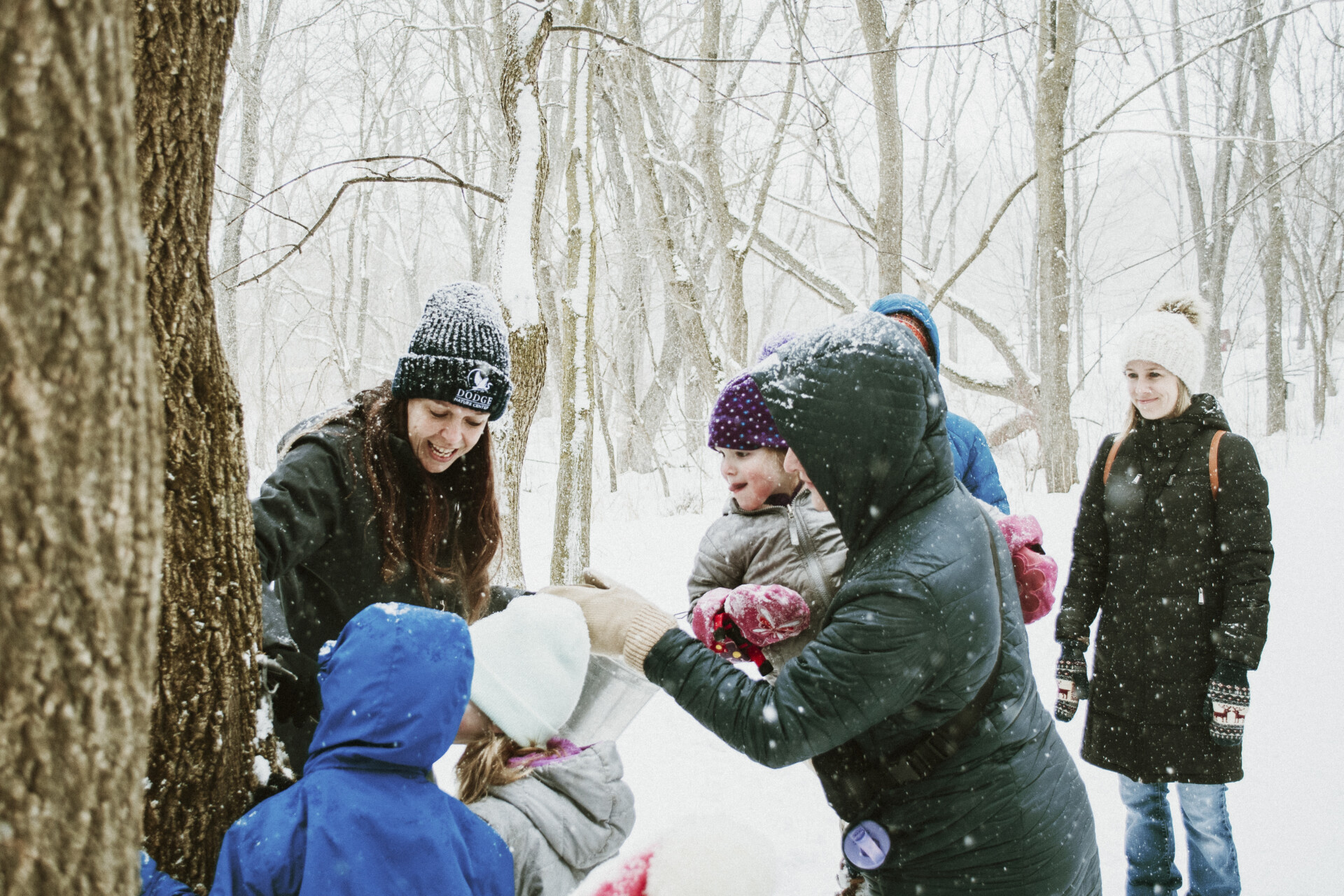
Naturalist Leah Darst leading a group on a maple syruping program in 2023. Participants are viewing a spile in a maple tree, where sap slows from and catches in a bucket.
We invite you to experience this time-honored tradition for yourself! Join us for a maple syruping program this March and celebrate the sweetness of the season on the trails.
Author: Naturalist Teresa Root
From the Trails is published monthly in our news & activities emails. Join our email list here.