Space is essential for all living things across the animal kingdom to survive.
In Minnesota, available space shrinks in the winter. Forests go dormant, ponds freeze over, and prairies appear lifeless. Hibernation and migration work wonders for some animals. But for smaller wildlife, there is a fantastic world where they thrive that we rarely see: under the snow.
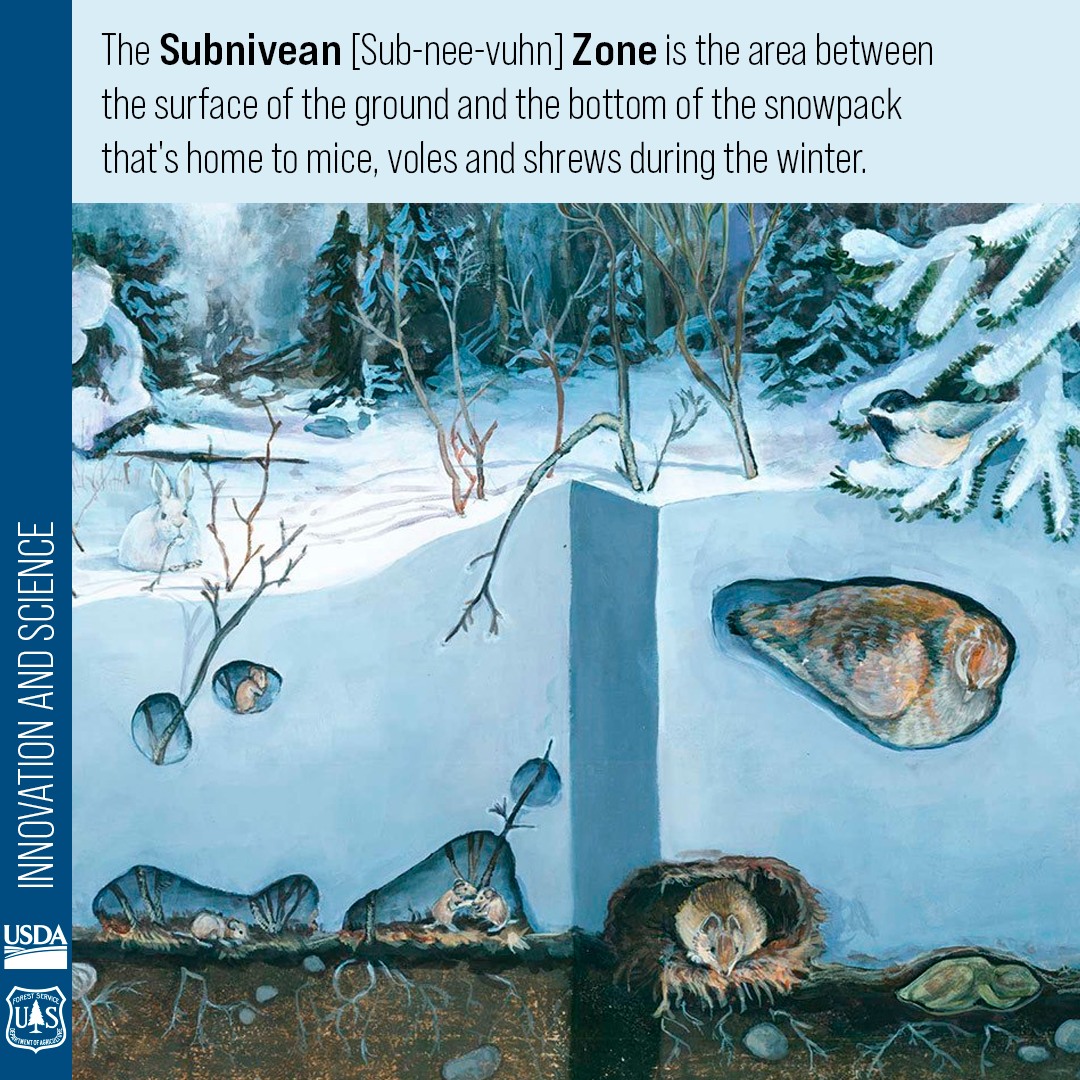
An illustration of the subnivean zone. Credit: U.S. Forest Service and Kristin Link.
The subnivean zone is the space between the top of the snow and the ground, often called the snowpack.
Within this snowpack is a vast network of tunnels and pathways that remain hidden from view above. Unseasonably warm temperatures last month have caused evidence of the subnivean zone to appear earlier than usual this year. "Cracks” in the snow are a likely sign of tunnels dug just below the surface.
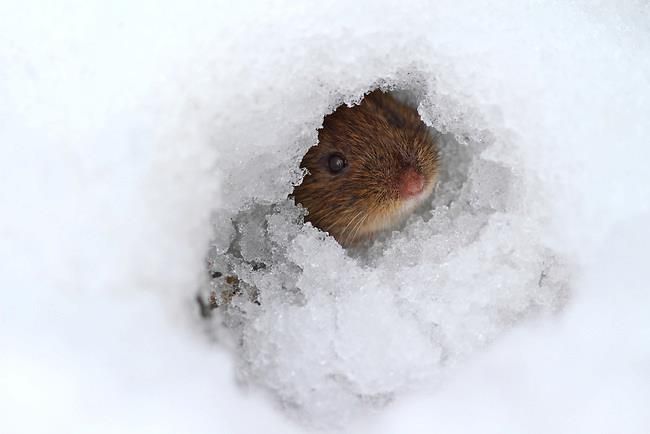
A meadow vole peeking out from the snow. This vole is very common and found all across Minnesota.
Small animals such as mice, voles, weasels, and even some insects live in the subnivean zone.
While air temperatures outside are unpleasant, insulating snow keeps the temperature inside the subnivean zone relatively stable and survivable for these small critters.
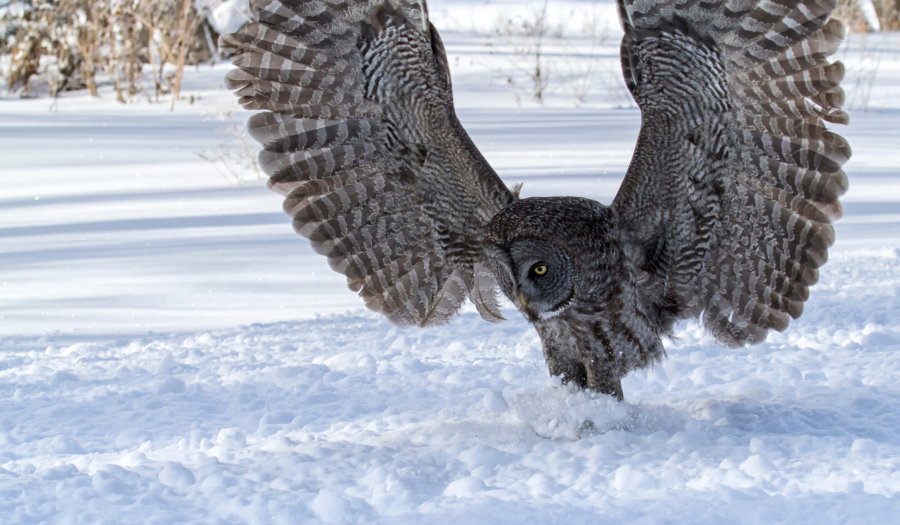
A great gray owl catching it's prey just beneath the snow in the subnivean zone. Like other owls, one of it's ear holes is higher than the other. This helps them identify sound and pinpoint their prey.
The subnivean zone also acts as a food source for predators in winter.
Foxes and owls use their excellent hearing to locate their prey just under the snow and pounce when the moment is right. Weasels will travel the lengths of subnivean tunnels to track down animals living within for their next meal.
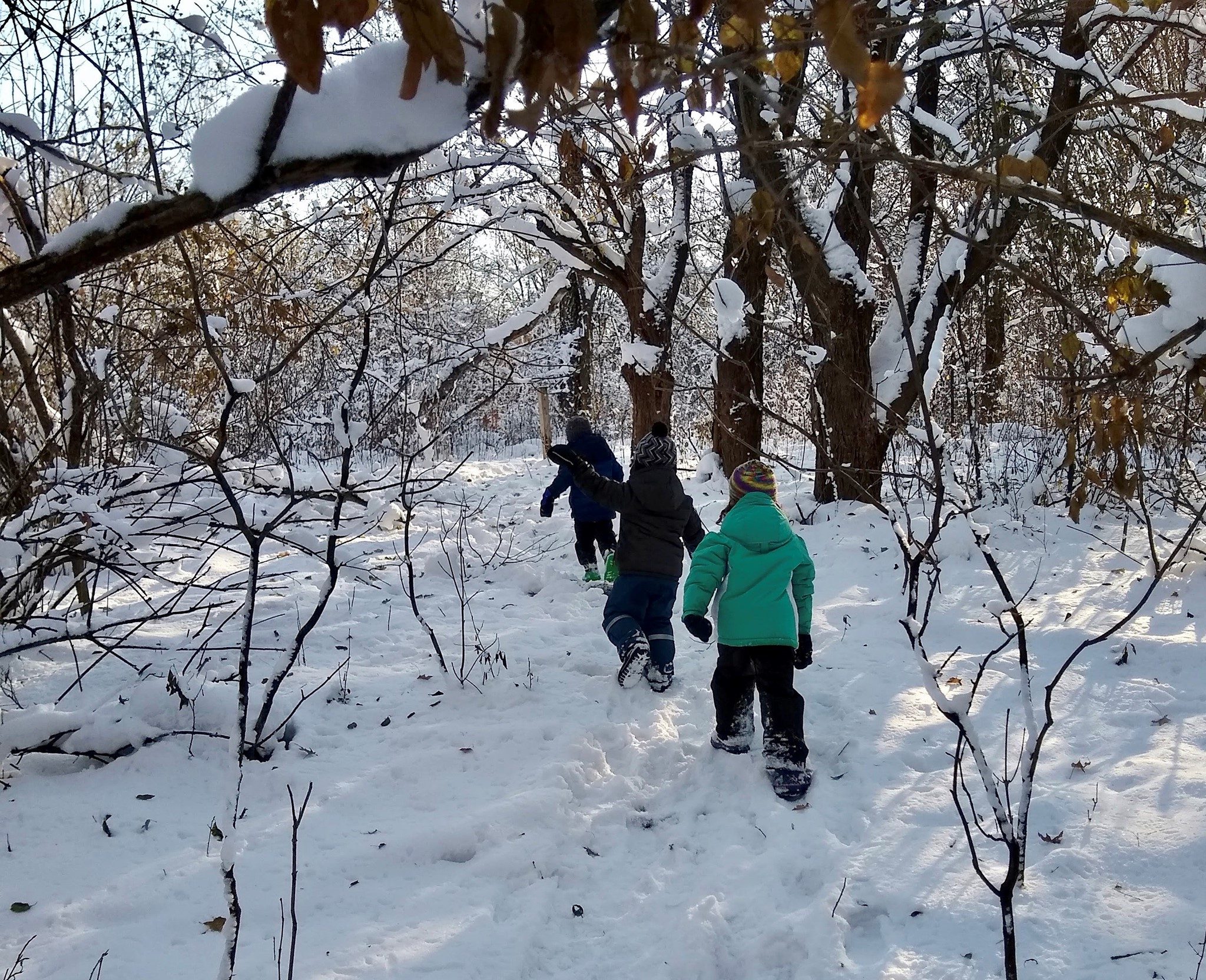
Kids hiking in a snow-covered forest at Dodge Nature Center.
Winter feels never-ending this time of year, but temperatures will slowly creep up. Look for these tunnels as they will eventually surface. It’s one way for us to engage with the subnivean zone!
Author: Naturalist Michael Harrison
From the Trails is published monthly in our news & activities emails. Join our email list here.