As November creeps along, winter weather finally arrives. Most migratory birds have made their way out of state to overwintering locations. It’s commonly said that birds “fly south for the winter”—but is that true for all birds?
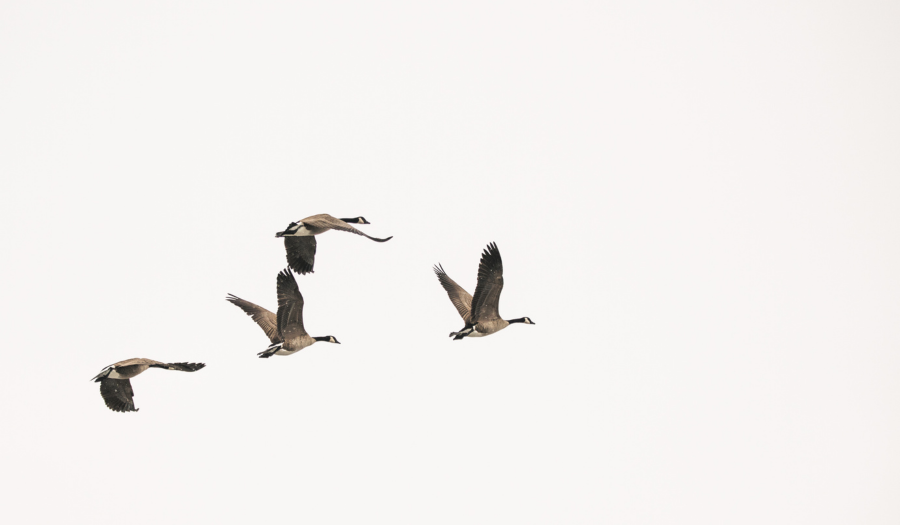
Canada geese migrating. These birds are commonly known to fly south in their signature V-shaped formation, although many stay in Minnesota throughout the winter. During migration, they can fly as far as 4,000 miles.
Migration and why animals leave Minnesota each winter is often misunderstood. Many people think animals depart simply because of the cold. Some insects, amphibians, and reptiles struggle with freezing temperatures. But there’s more to migration.
For warm-blooded animals like birds and mammals, cold isn’t the main driver of migration. They leave as a side effect of winter’s biggest challenge: a lack of food and water. When plants go dormant, food supplies plummet. Insects vanish, berries disappear, and wild seeds can only stretch so far.
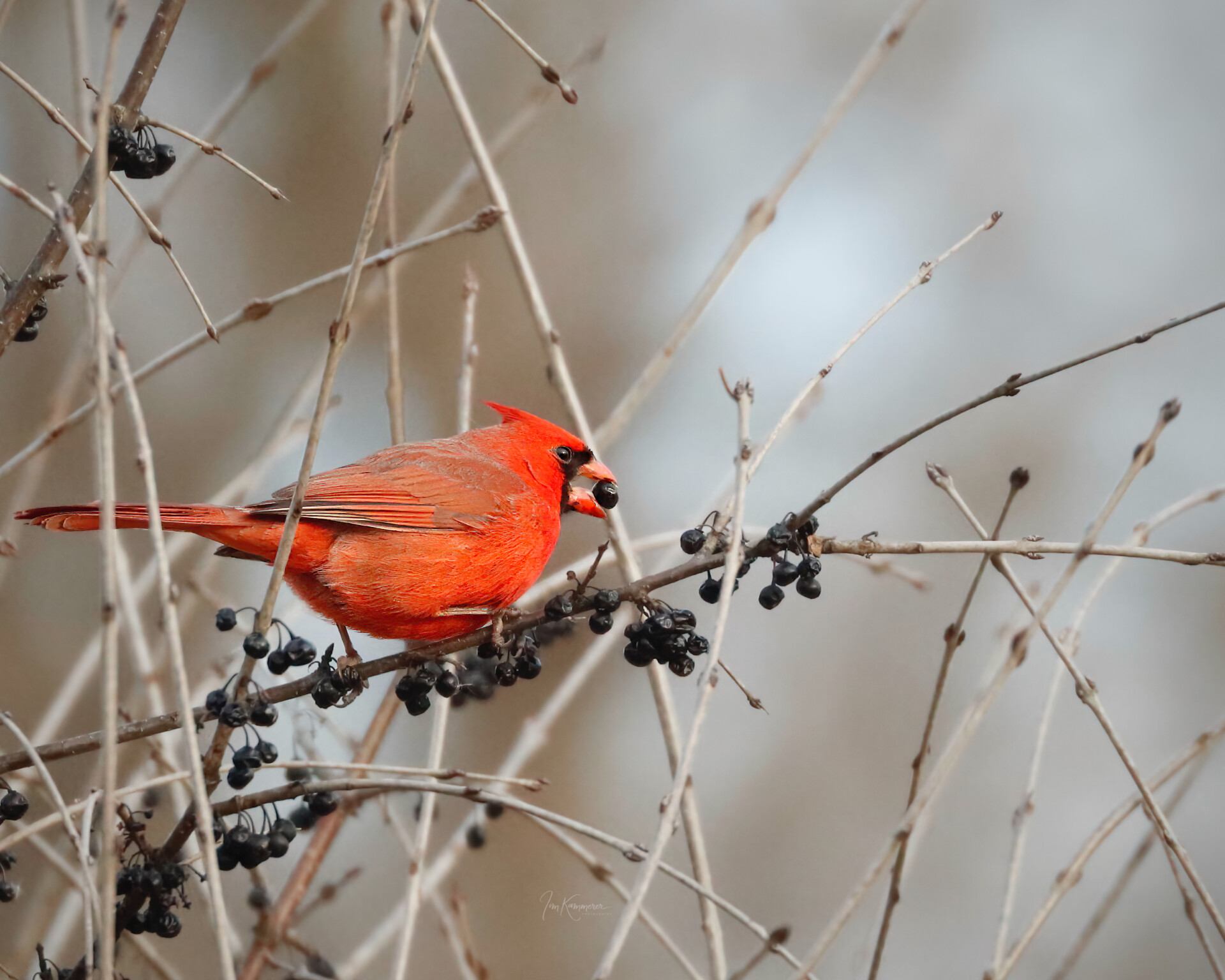
A cardinal eating berries off a bush during winter at Dodge Nature Center's Main Property in West St. Paul, Minnesota.
Cardinals are one bird that doesn't migrate, using adaptations like dense, insulating feathers and storing up body fat in fall. They are also territorial birds, preferring to stay and defend their range rather than migrating and returning.
Photo credit: Jim Kammerer.
Enter migration, a strategy to survive the season’s scarcity. Some waterfowl and warblers travel long distances to reach areas with more abundant food. But for others, Minnesota is their migration destination. One notable little bird? The dark-eyed junco.
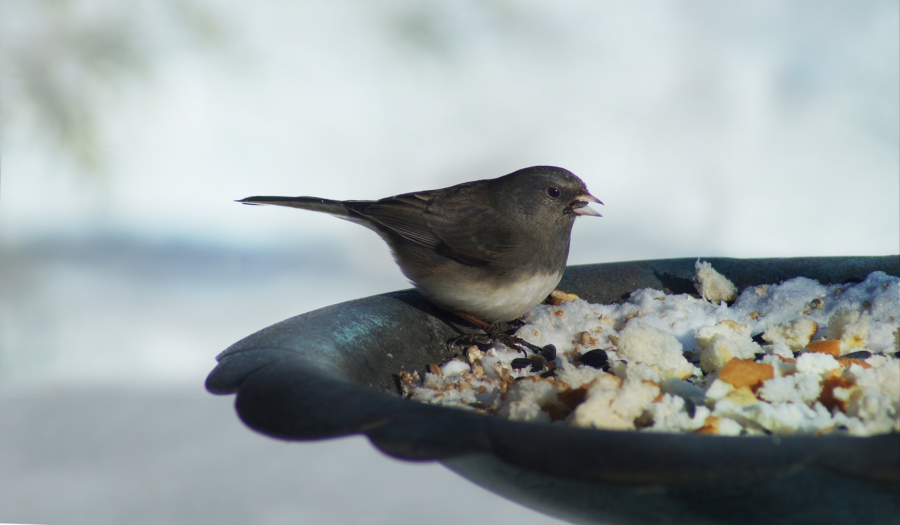
The dark-eyed junco feeding on bird seed.
Dark-eyed juncos arrive in the Twin Cities area in late fall and early winter, their metallic chirps and trills heralding the winter season. Spotting one is a hallmark of seasonal change, much like red-winged blackbirds in spring. These seed-eaters migrate just far enough to find reliable food, making them familiar winter guests at feeders across Minnesota.
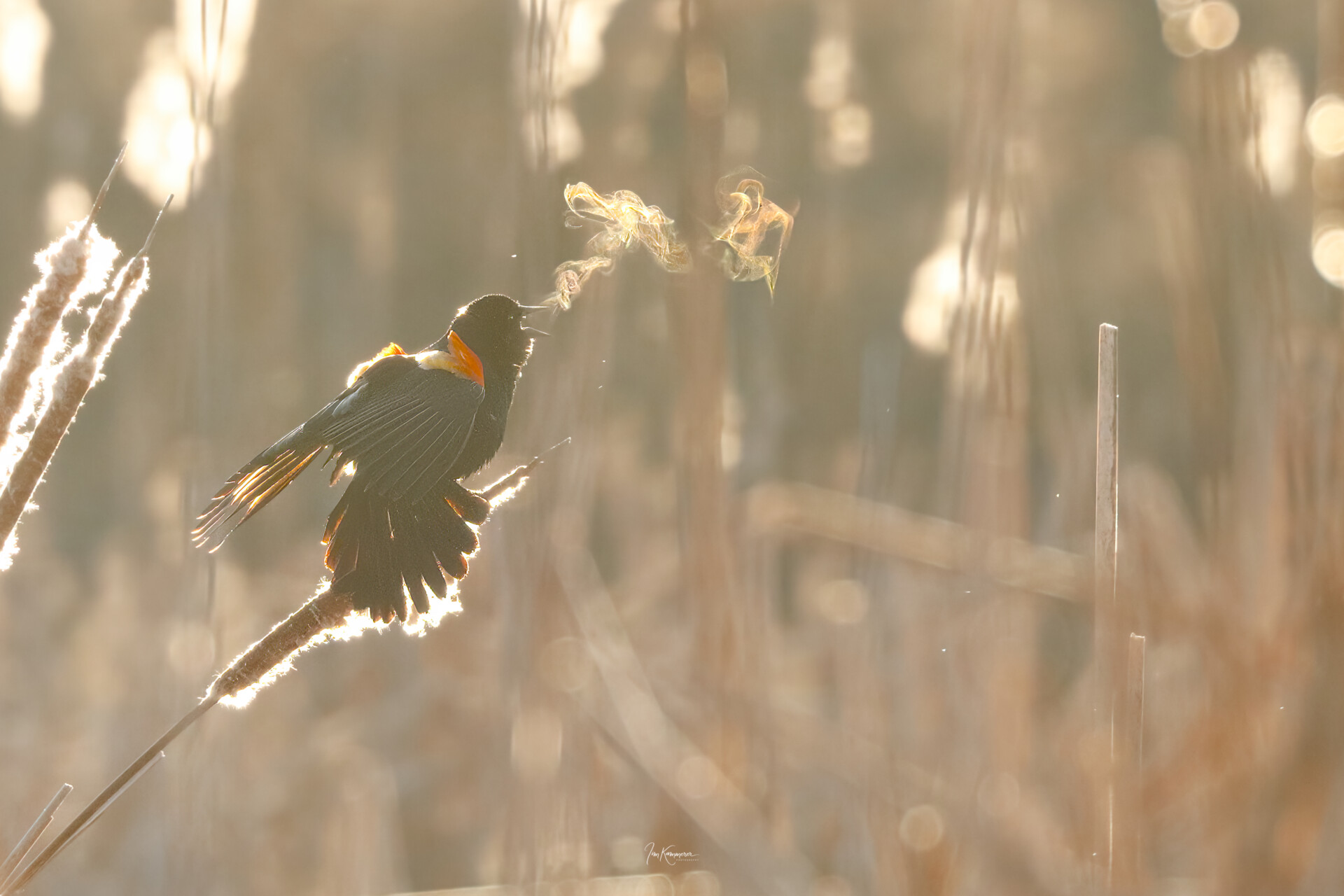
A red-winged blackbird perching on a cattail mid-song, captured at Dodge Nature Center's Main Property in West St. Paul, Minnesota.
Photo credit: Jim Kammerer.
Keep an eye out for the juncos this year—you might notice one for the first time!
Want to learn more about juncos? Watch this Nature to Go video.
Author: Naturalist Michael Harrison
From the Trails is published monthly in our news & activities emails. Join our email list here.