Orange isn’t the most common color in nature, but at this time of year, you might notice a spot of orange flitting around the prairie. What are you seeing? That would be a monarch butterfly!
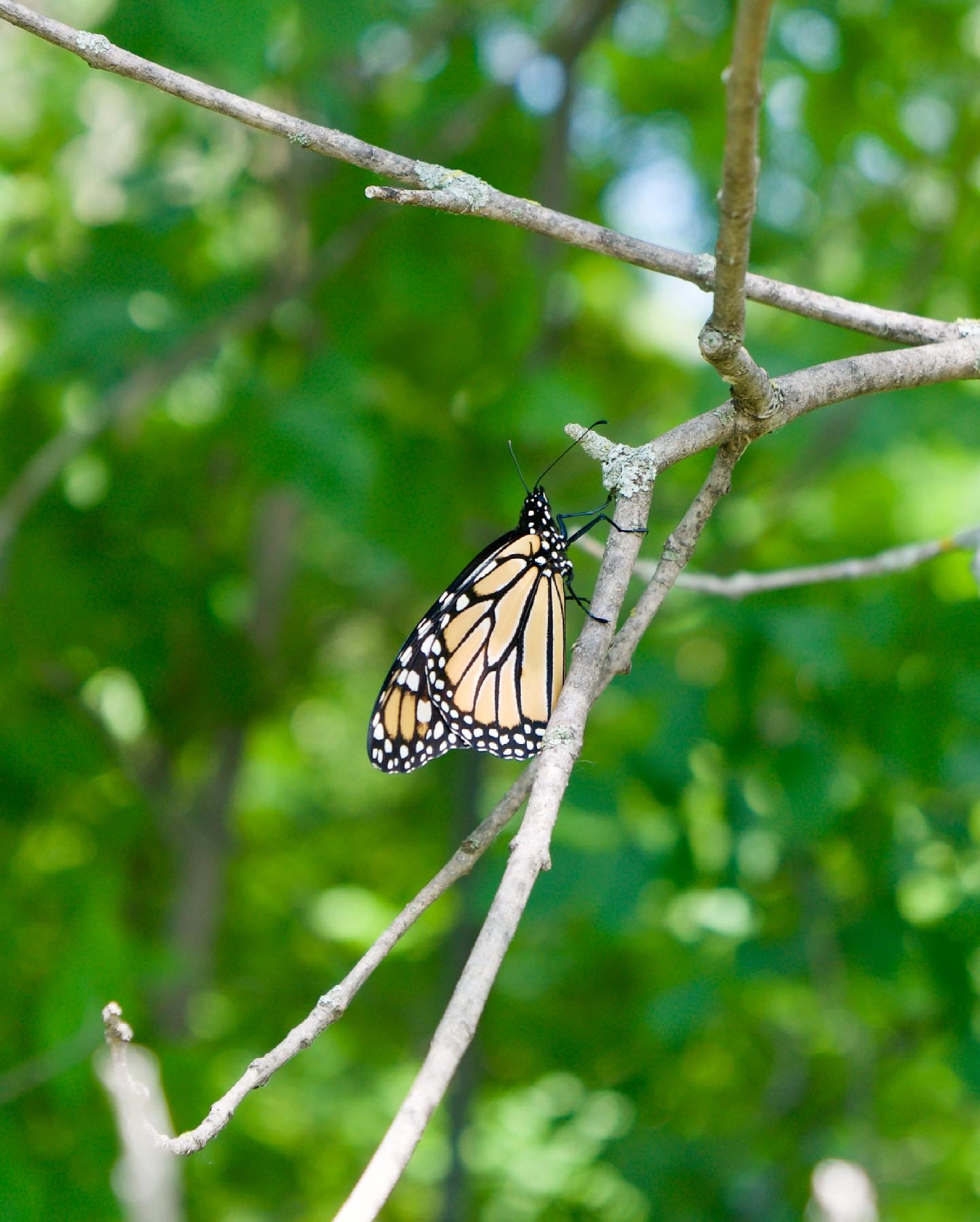
A monarch perched on the branch of a tree.
Mid-August is an interesting time for monarchs because this is the time of year when their migration begins. Starting on August 17 this year, there will be less than fourteen hours of daylight. This decreasing sunlight triggers a change in the monarch’s behavior.
Monarch butterflies that emerge from their chrysalises after this date will not breed. Instead, they will head south. They will stop along the way to feed on nectar, so they have enough energy for the migration. One of their favorite plants is blazing star. In late August, you might spot multiple monarchs on a single plant.
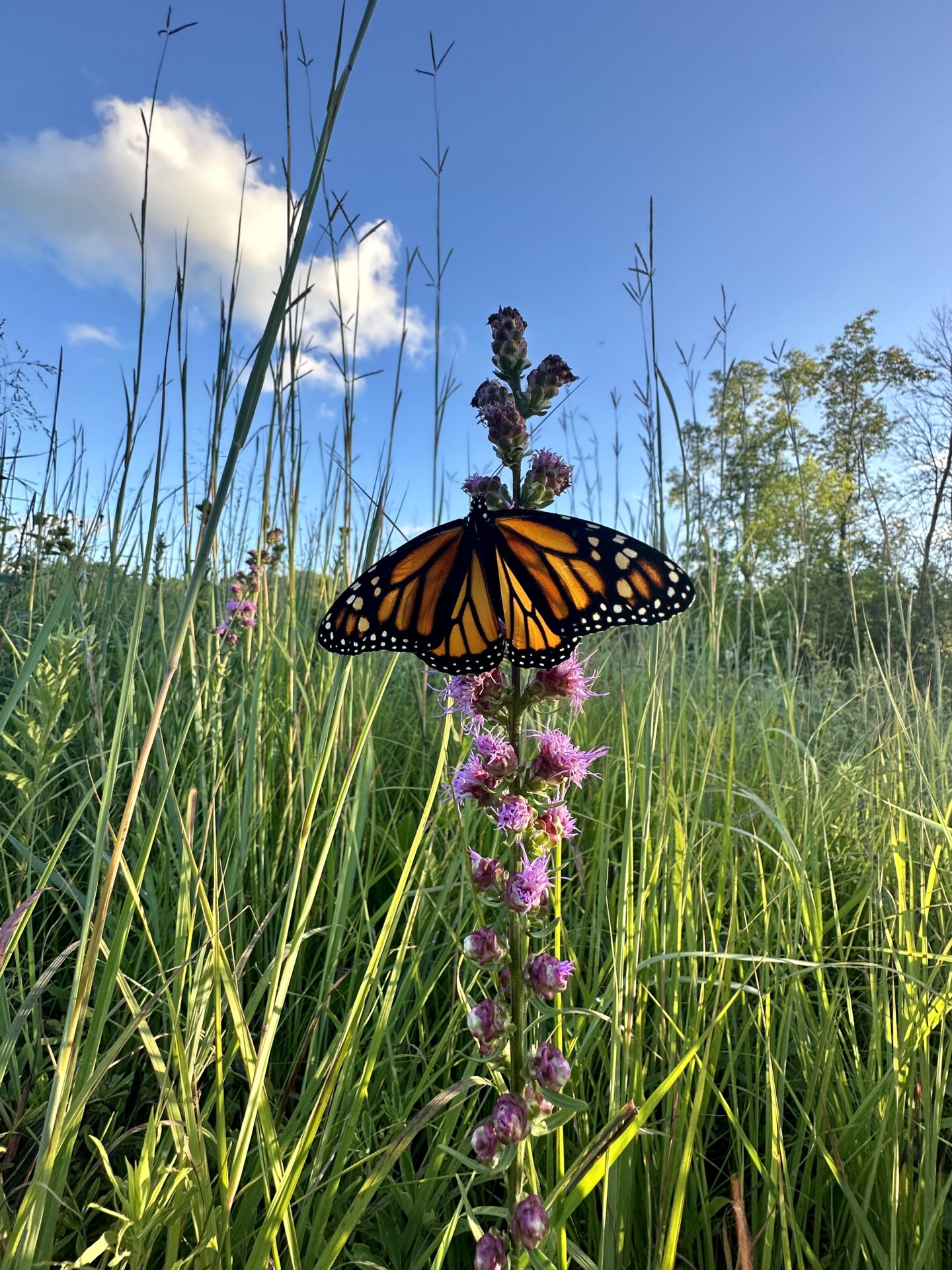
A monarch feeds on blazing star in the prairie at Dodge Nature Center's Main Property in West St. Paul.
By mid-September most of the monarchs are gone from the state. Their journey will have taken them on a 2,000+ mile trip through the center of the country and into the mountains of Mexico.
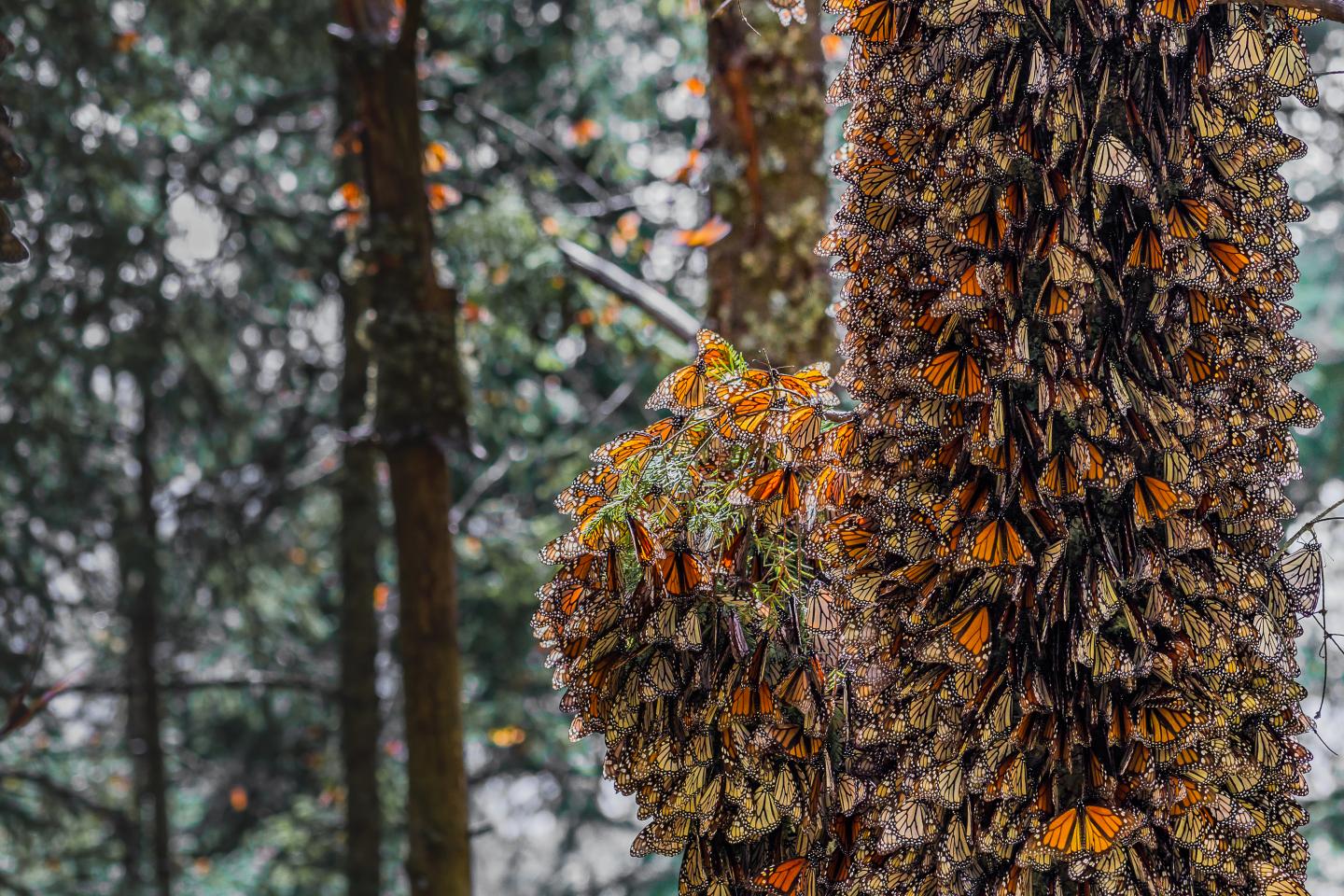
Monarchs roosting on the an oyamel fir tree in Biosphere Reserve, Mexico.
Image courtesy of Eligio Garcia-Serrano (Monarch Fund, Zitácuaro, Mexico) and Ambiente Cielo Rojo.
Once they arrive, they will rest on the branches of oyamel fir trees—not drinking or flying around—just resting. And waiting for days in March when the amount of daylight increases, triggering the change within them to mate and begin the journey back north to Minnesota.
Author: Naturalist Teresa Root
From the Trails is published monthly in our news & activities emails. Join our email list here.