Who is that furry fellow on the pond?
If you’ve visited the Main Property recently, maybe you saw something furry scamper or swim across the farm pond. We’ve noticed an increase in semi-aquatic mammal activity recently and telling who’s who can be tricky!
Here’s your guide to the three most common mammals spotted in and around our wetlands.
Muskrat
By far, the most common mammal sighting on the pond is the muskrat. These little guys live in lodges built from cattails and other aquatic vegetation along the shoreline. They feed primarily on aquatic vegetation, but will occasionally eat things like snails, minnows, or small turtles.
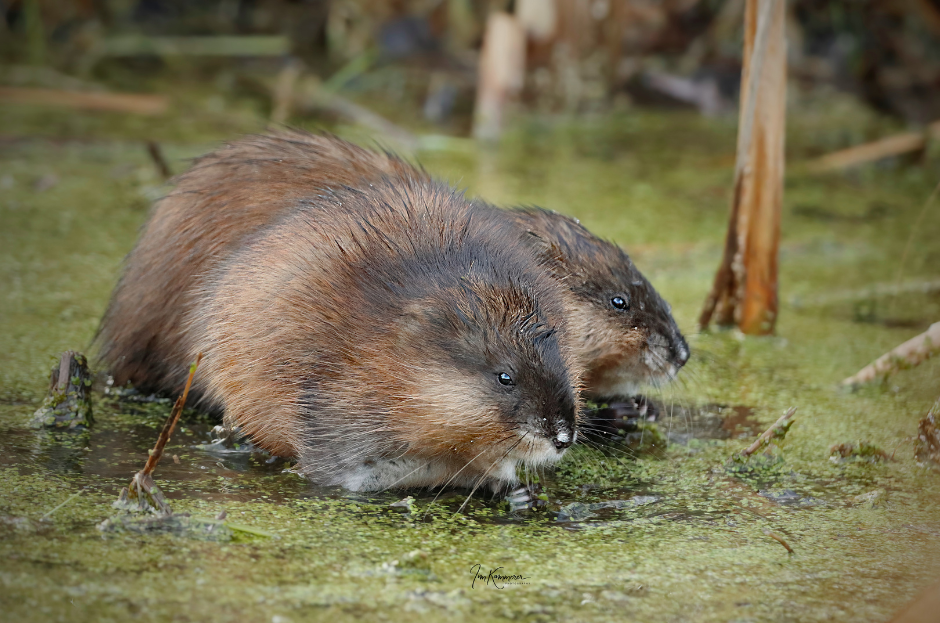
Two muskrats in the Farm Pond at Dodge Nature Center in West St. Paul, Minnesota, November 2025.
Photo credit: Jim Kammerer
Muskrats weigh between 2–5 pounds and have small, round bodies about 10 inches long, and skinny, hairless tails about 9 inches long. Their tracks consist of a larger hind foot about 2–3 inches long, and a smaller forefoot about 1.5 inches long. Their tail drags behind and usually leaves a distinct line down the middle of their tracks.
Fun fact: While they are often misidentified as beavers, they are much more closely related to hamsters and mice.
Mink
Mink are similar in size to muskrats, weighing 2–4 pounds with an average length around 20 inches from nose to tail. However, their bodies are very different from the muskrat. They have a long, tubular body with short legs and a furry tail.
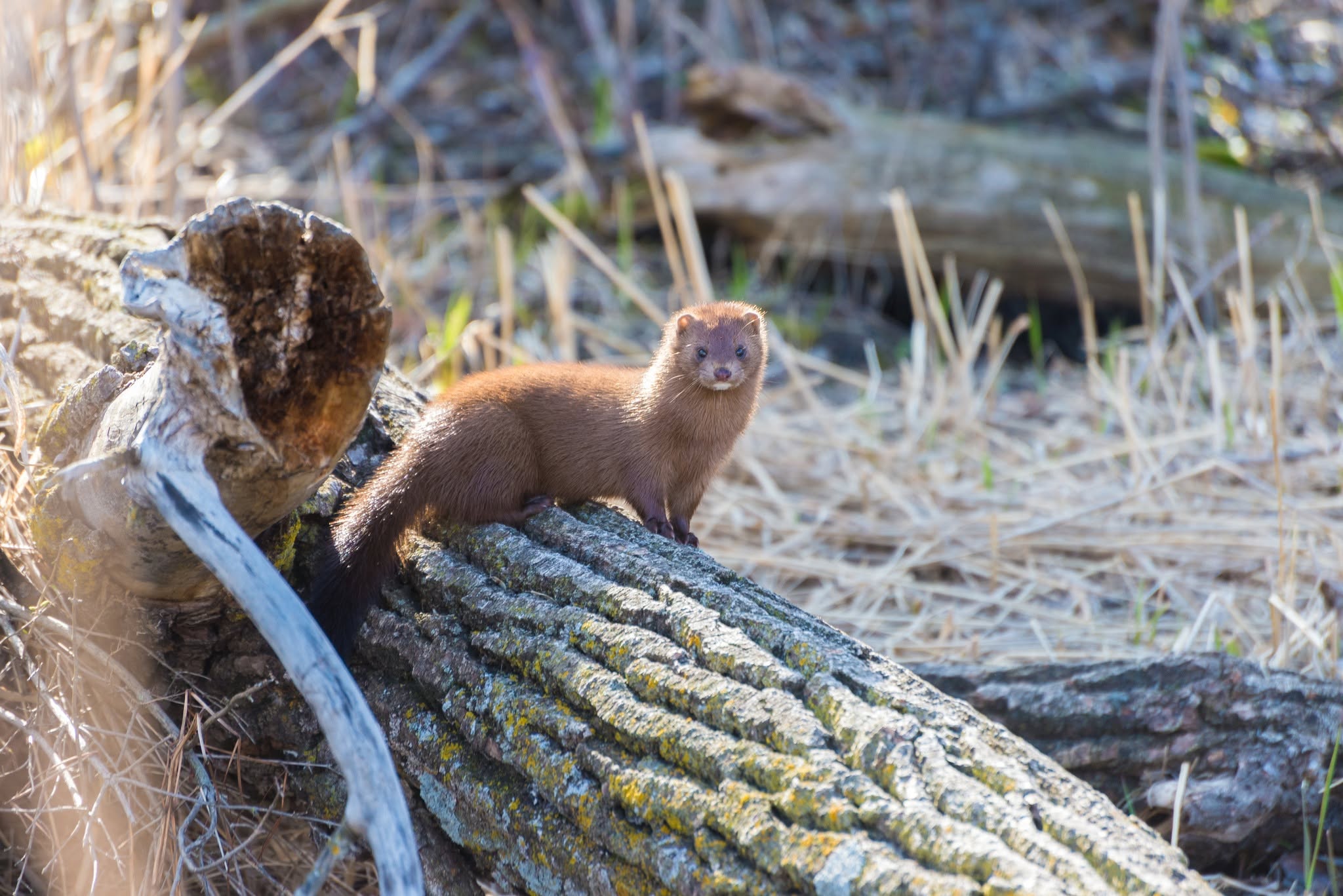
A mink photographed standing on a log in the wetlands at Dodge Nature Center in West St. Paul, Minnesota, May 2022.
Photo credit: Jason Hedlund
Mink are fierce predators who will eat just about any living animal in or around the wetlands. They are abundant in Minnesota and common at Dodge, but that doesn’t make them any less special to see!
You may see mink tracks, measuring 1–2 inches long, on the boardwalk or in the mud. Mink move with a bounding gait, meaning their hind feet land on top of or in front of the tracks of their front feet, resulting in paired tracks. The larger the gap between track pairs, the faster the mink was moving!
Otter
The largest of the three mammals spotted on the pond is the river otter!
River otters can grow up to 4–5 feet long from nose to tail and weigh up to 30 pounds. Otters have long, tube-shaped bodies like minks, but their tails are slicker rather than fluffy. Their faces have a wider, rounded nose and jawline compared to mink, whose snouts are much pointer.
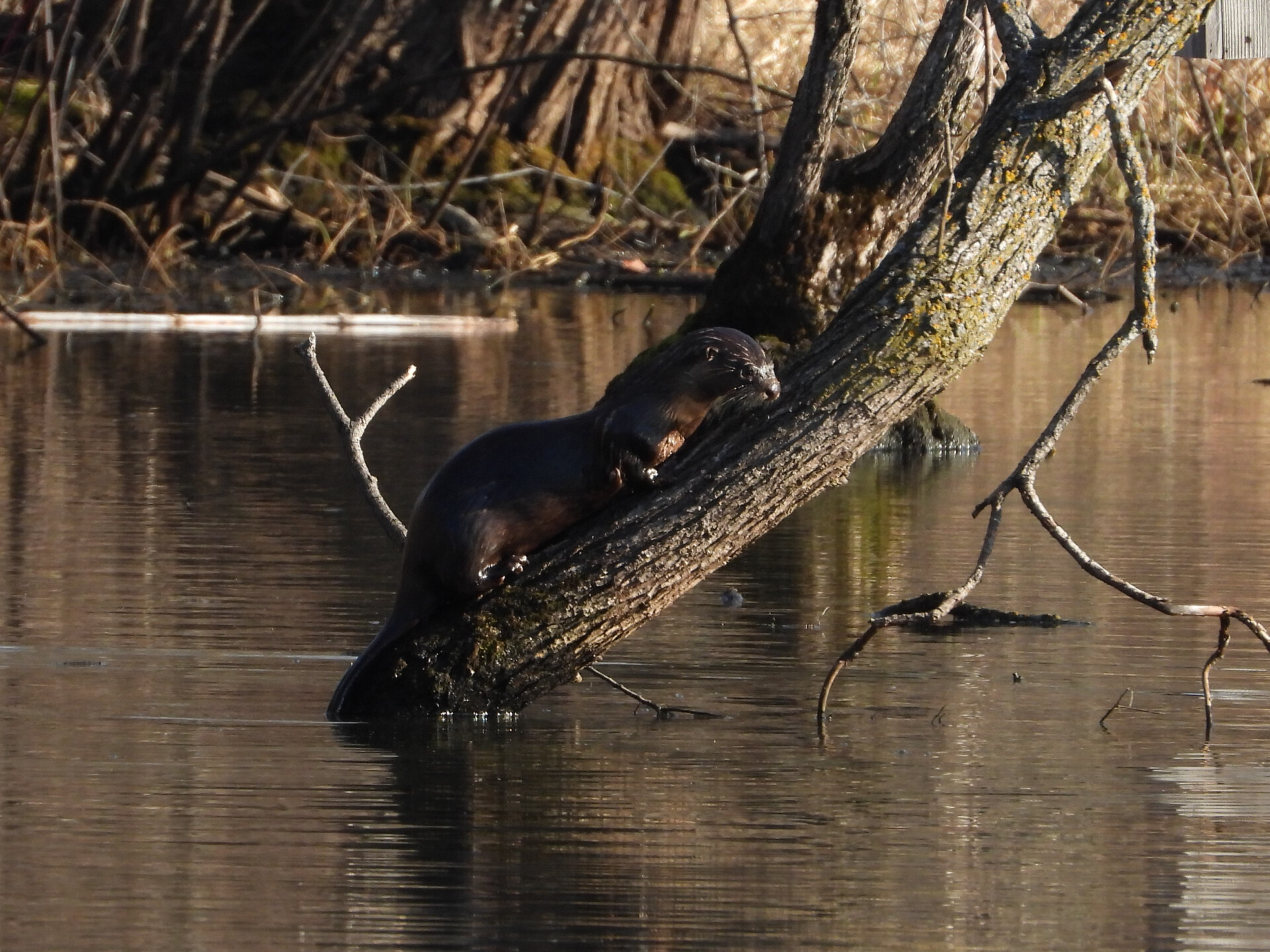
A river otter photographed on the Farm Pond at Dodge Nature Center in West St. Paul, Minnesota, April 2020.
Otters belong to the same family as mink and are also skilled predators, known to prey on both muskrats and mink. At Dodge, we've witnessed signs of otters eating crayfish and freshwater mussels.
Otters are very playful and graceful swimmers, spotted flipping and diving in the ponds at Dodge. When moving on land, they often bound and slide across slick surfaces like muddy embankments.
Now, you otter know the difference between these three animals!
Author: Naturalist Mary Dybvig
From the Trails is published monthly in our news & activities emails. Join our email list here.