Summer is all around us at the nature center. Birds are singing, turtles are basking, and wildflowers are blooming. But perhaps the sweetest part of summer is the delicious berries waiting to be snacked on as you wander the trails. Late June into July is peak berry season—and yes, they really are berry delicious!
Not all wild berries are edible. Luckily, the berries that are safe for our bellies are relatively easy to identify. Let's learn about a few of our favorite wild fruits and which berries to bypass.
Berries to avoid
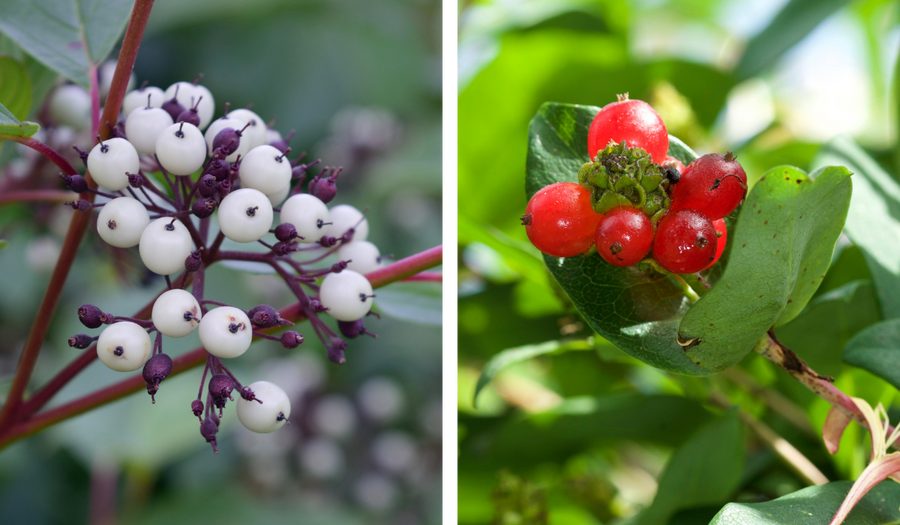
Left: Gray dogwood berries. Right: Honeysuckle berries.
Their distinct, round shape are one sign they're not safe for human consumption.
When foraging for edible berries, pay close attention to two key characteristics: shape and color. As a general rule, round berries are often not safe to eat. Avoid these inedible berries:
- Gray dogwood. Its white berries aren’t highly toxic, but they’re extremely bitter and can cause nausea and diarrhea.
- Honeysuckle. Its bright red berries are toxic to humans.
- Common buckthorn. These dark blue to nearly black berries are found almost everywhere. While technically edible, these berries are not typically consumed due to their laxative properties. One student claimed it only took seven berries to regret that snack!
Berries to enjoy
Now for the fun part—berries we can eat! Minnesota is home to plenty of tasty wild berries. In general, the berries that are safe to eat are aggregate fruits, meaning they're made up of many small, juicy segments.
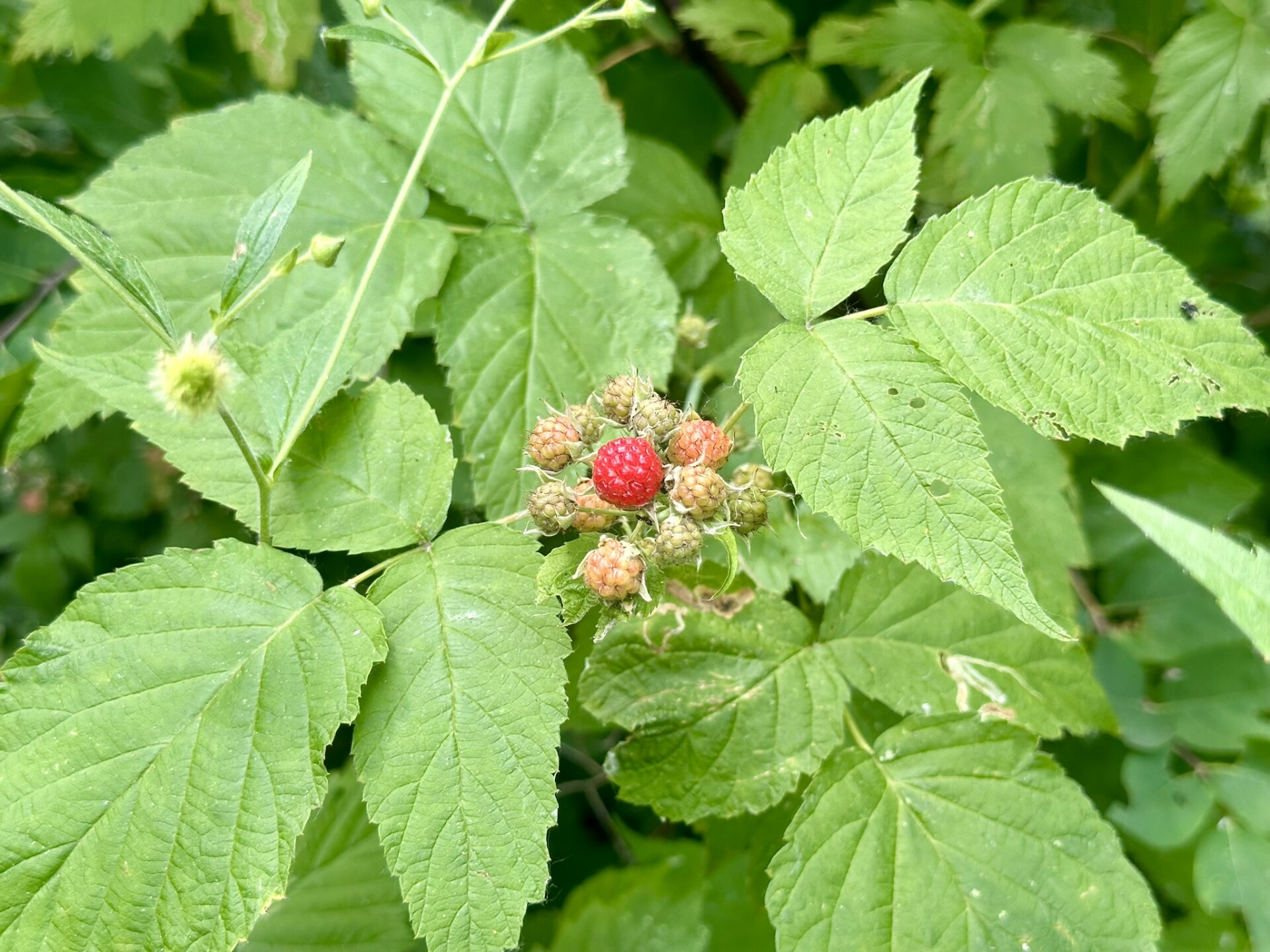
Black-capped raspberries in varying stages of ripeness on a raspberry bush. The berries turn from green to red and finally to dark purple-black when ripe.
Some of our favorites around Dodge are:
- Red and black-capped raspberries. The red ones look just like store-bought raspberries, while the black-capped variety is often mistaken for blackberries, but they’re usually sweeter.
- Mulberries. These grow on trees and are dark purple or black when fully ripe.
In North America, there are only two aggregate fruits are toxic: jack-in-the-pulpit and goldenseal. Be sure to positively identify any wild berry before eating it.
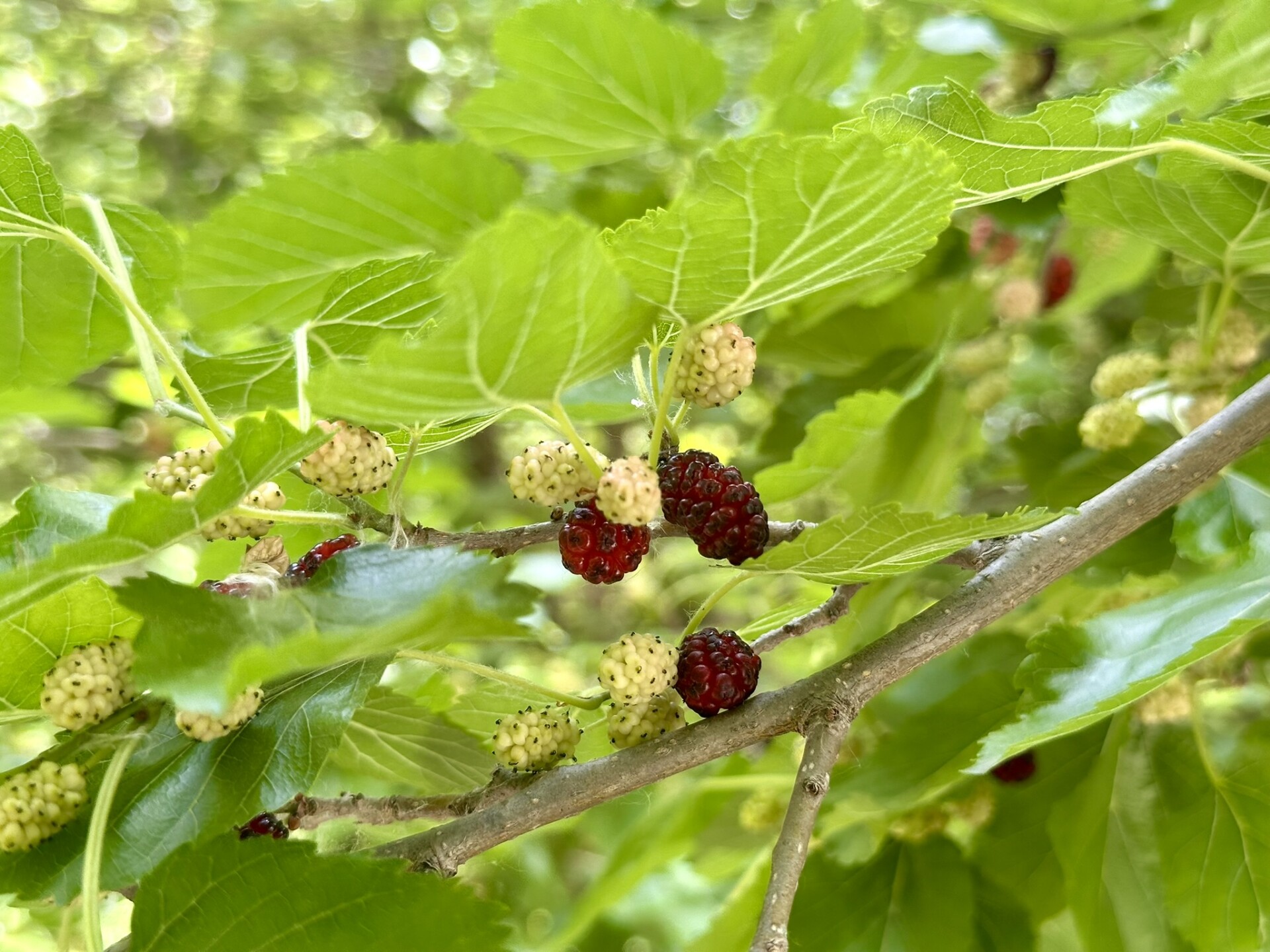
Mulberries ripening on a mulberry tree, a tree found at Dodge Nature Center's Main Property in West St. Paul.
When it comes to harvesting wild berries, the best rule is to take only what you’ll eat in one sitting. We’re not the only ones who love these delicious fruits—birds and mammals depend on them, too. Sharing the bounty ensures there’s enough for everyone, human and wildlife alike.
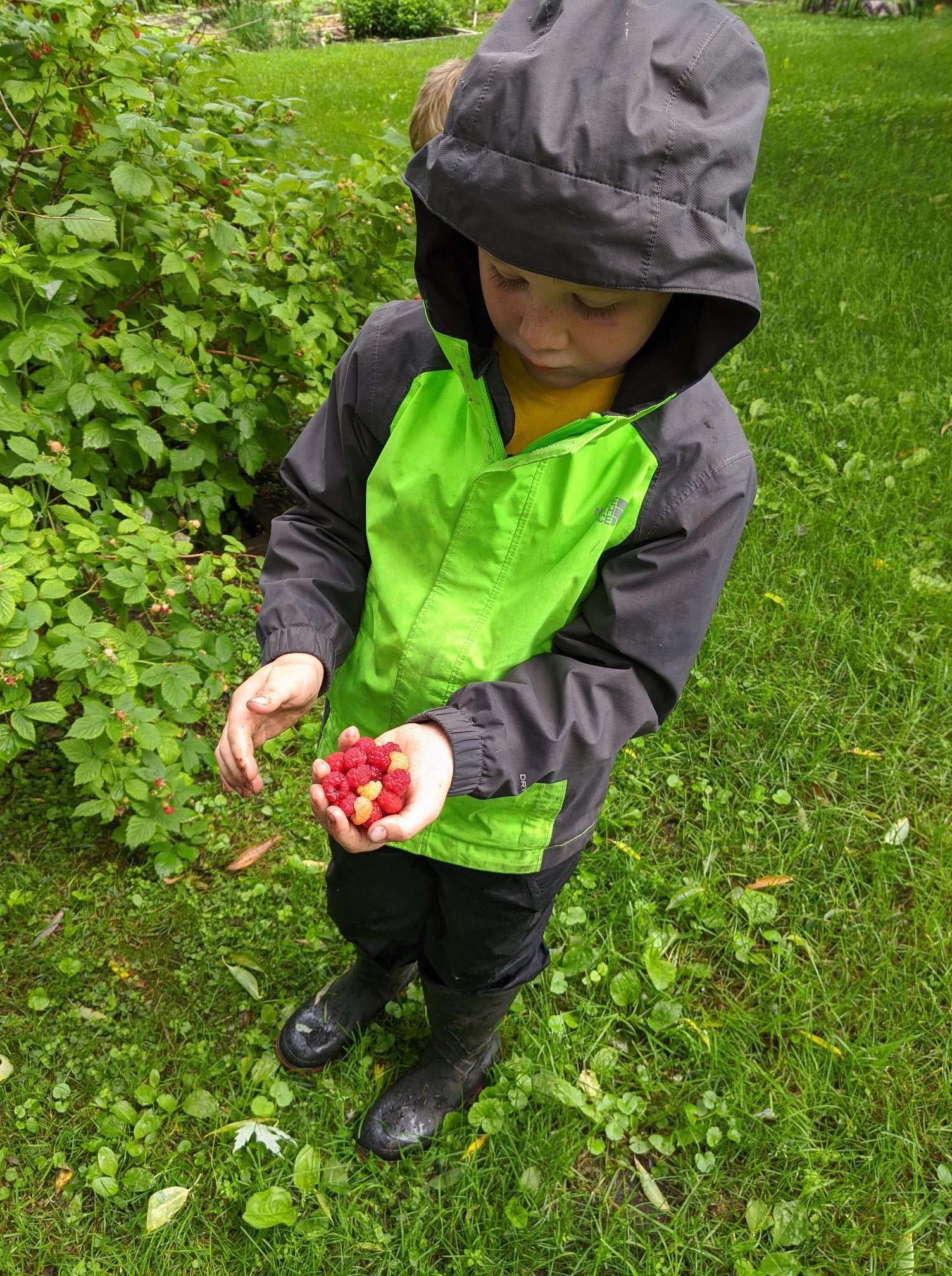
A preschool student holds a handful of freshly picked raspberries.
Author: Naturalist Michael Harrison
From the Trails is published monthly in our news & activities emails. Join our email list here.