Spending time in nature is a very sensory experience—listening, feeling, and seeing the outdoors around you. At Dodge, we invite you to take a step further with tasting.
Food has long been incorporated into education at Dodge. One of the first programs established was a teaching garden. Students tilled dirt, planted seeds, cultivated seedlings, and harvested fruits and vegetables at summer’s end. Maple syruping, campfire cooking, and wild edibles followed, and are now staples of youth programming.
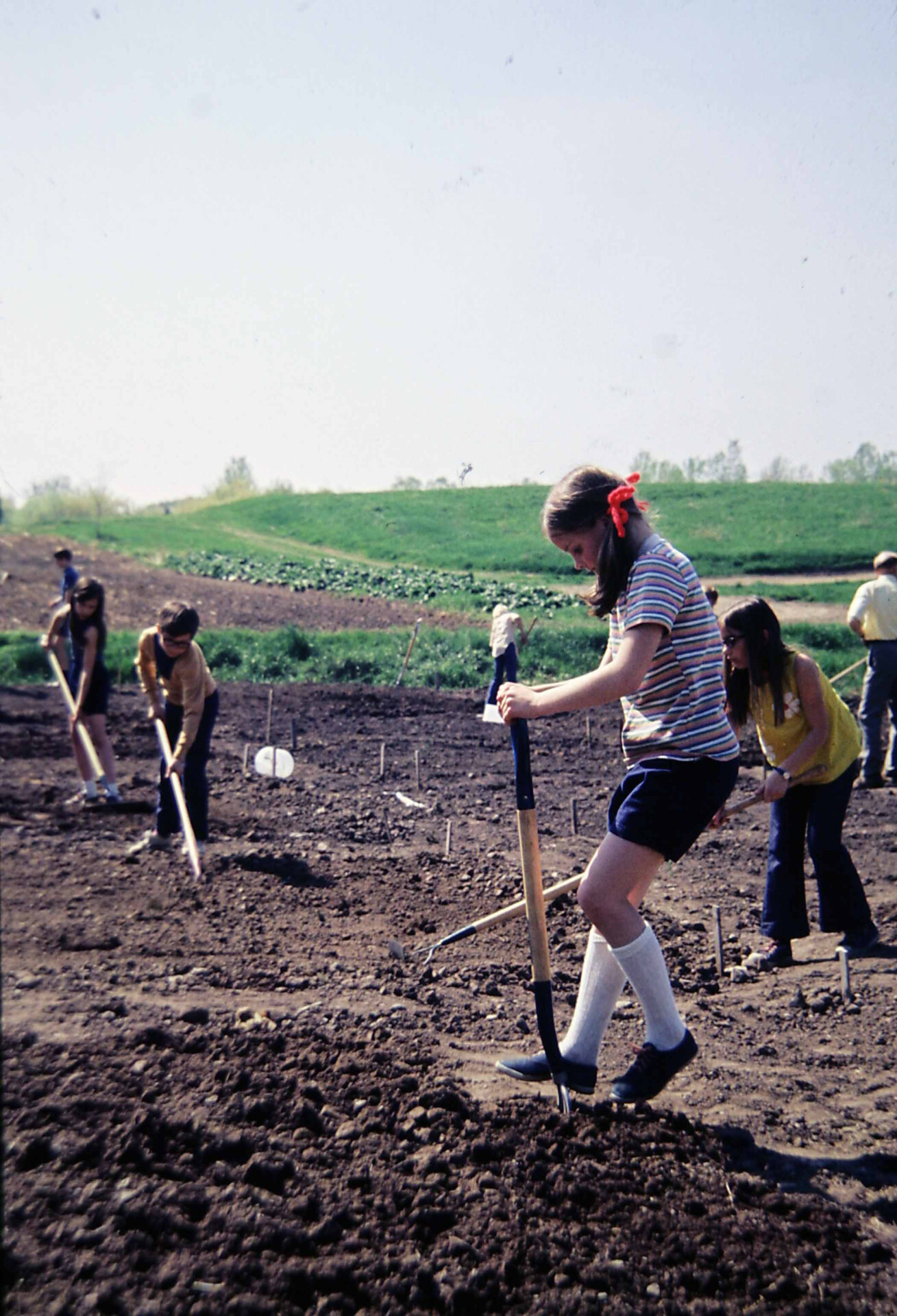
A group of students tilling dirt in the teaching garden, circa 1970s.
In recent years, food has helped create a space just for adults at Dodge. Naturalist Michael Harrison recognizes the need for these adult-only programs.
“Adults don’t have a lot of spaces where they’re allowed to not know everything,” Michael explains. “When they come to Dodge, they’re given the guidance in a judgement-free zone to learn something new.”
Programs like Wild Cocktails, Foraged Foods, Apple Pie Date Night, and the Taste and Learn series (featuring topics like bread and herbs) have stirred interest and appetites.
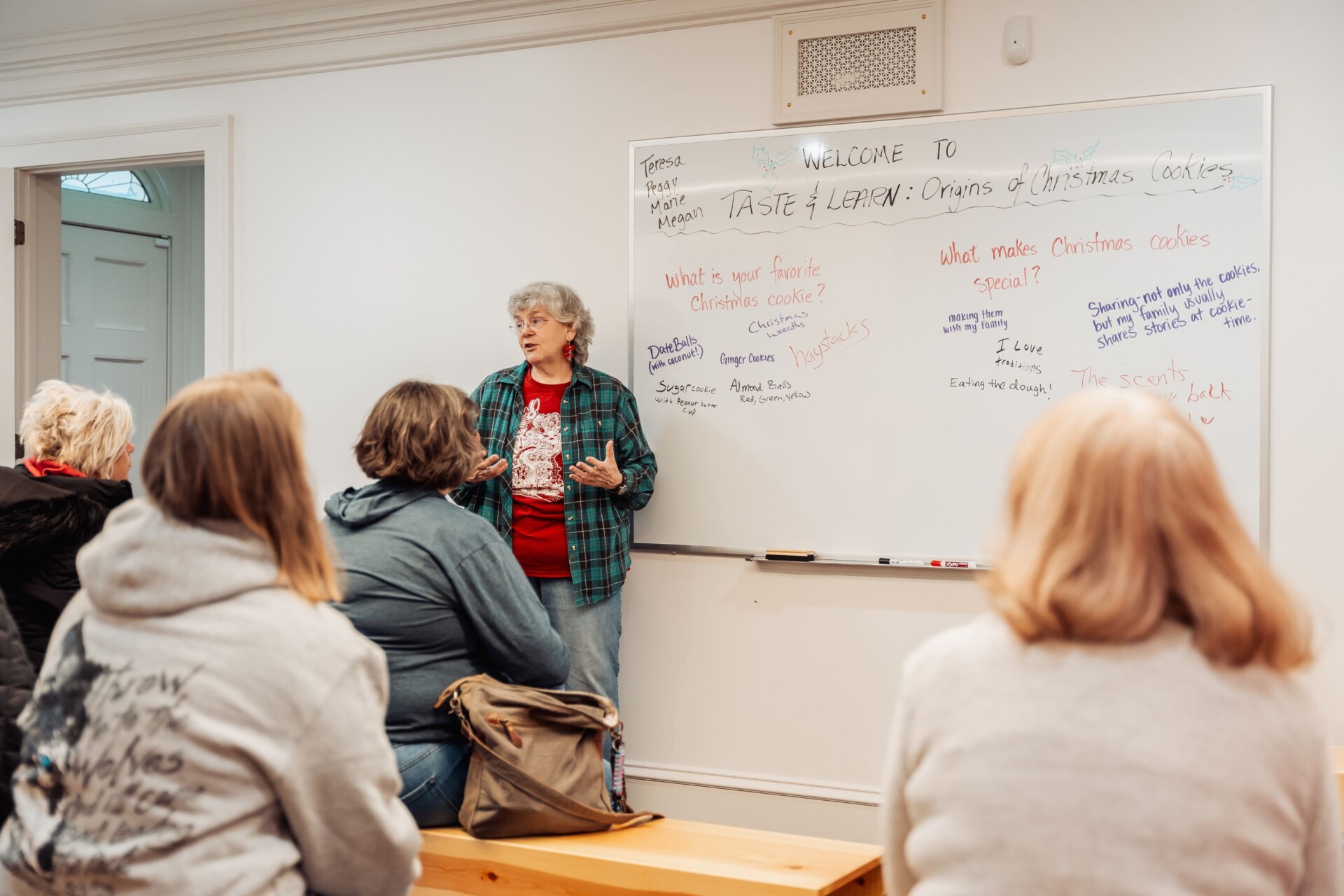
Naturalist Teresa leading a Taste and Learn program all about holiday cookies.
“Our tagline is Nourish Your Need for Nature—we take that literally!” says naturalist Teresa Root, creator of the Taste and Learn series. “Using food in our programs attracts, educates, and inspires our visitors.”
When developing food-based programs, naturalists create an experience that is rooted in natural history, locally available ingredients, and hands-on activities. Adult audiences also give naturalists the opportunity to go deeper into a topic. Take maple syruping as an example.
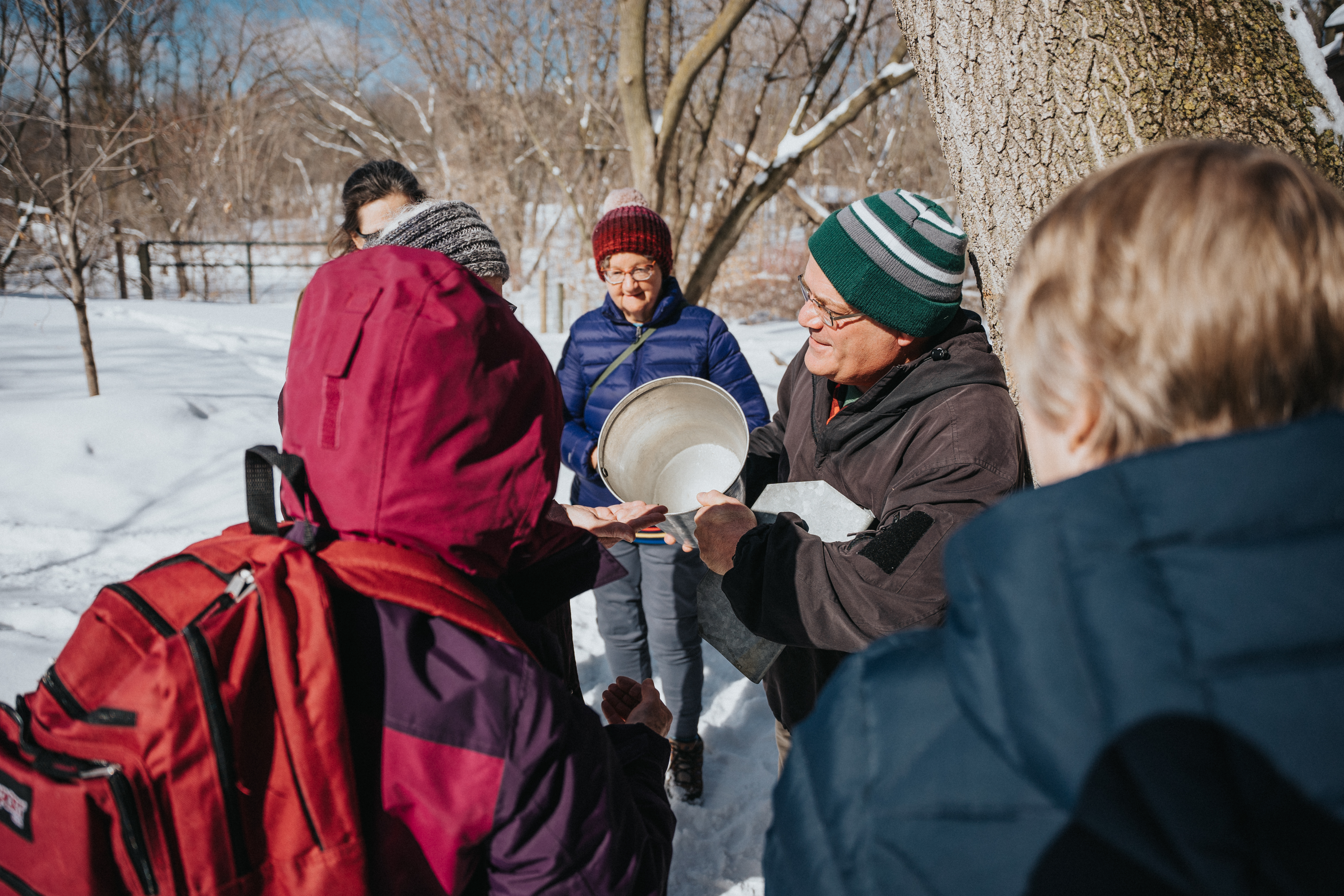
Naturalist Pete serving small samples of maple sap to adult participants of a maple syruping program.
“With adults, I’ll talk about forestry management and why sugar maple trees stand in big pockets,” naturalist Andy Vang explains. “Indigenous peoples cared for forests with such intentionality—it’s where their food came from.”
Hands-on is what we do at Dodge. Naturalists have adults collecting eggs from real chickens, foraging mushrooms in the woods, and picking apples right off the tree.
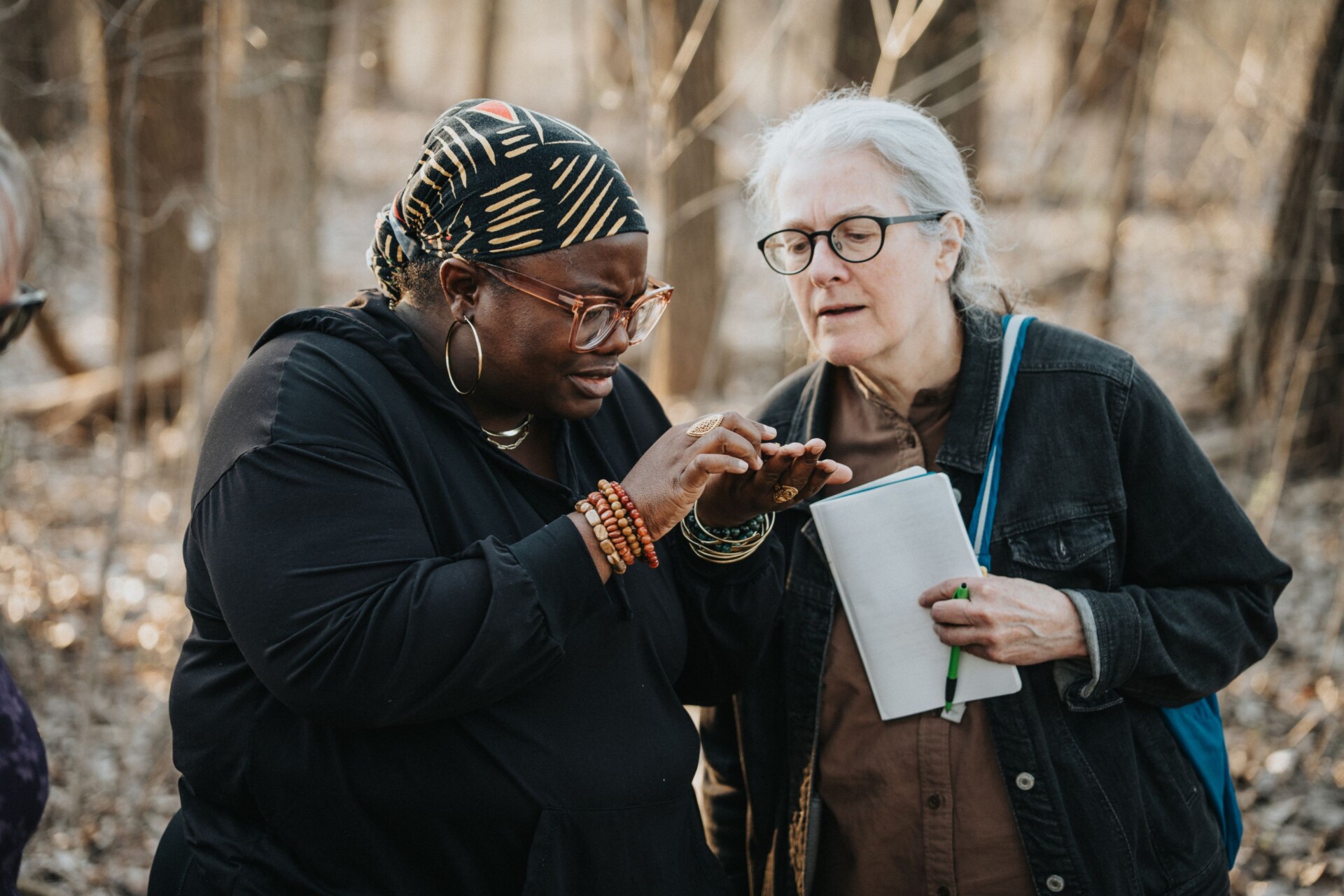
Two participants in Mushrooming 101 getting a closer look at a mushroom.
Learning by doing is not only fun for participants but helps knowledge stick—and makes the connection from curiosity to care. Michael sees this with foraging and wild edible programs.
“A lot of people view weeds—dandelions, stinging nettle, and garlic mustard—as useless plants,” Michael says. “But these are edible plants. Reframing how people approach them gives them a reason to care about what is going on outside.”
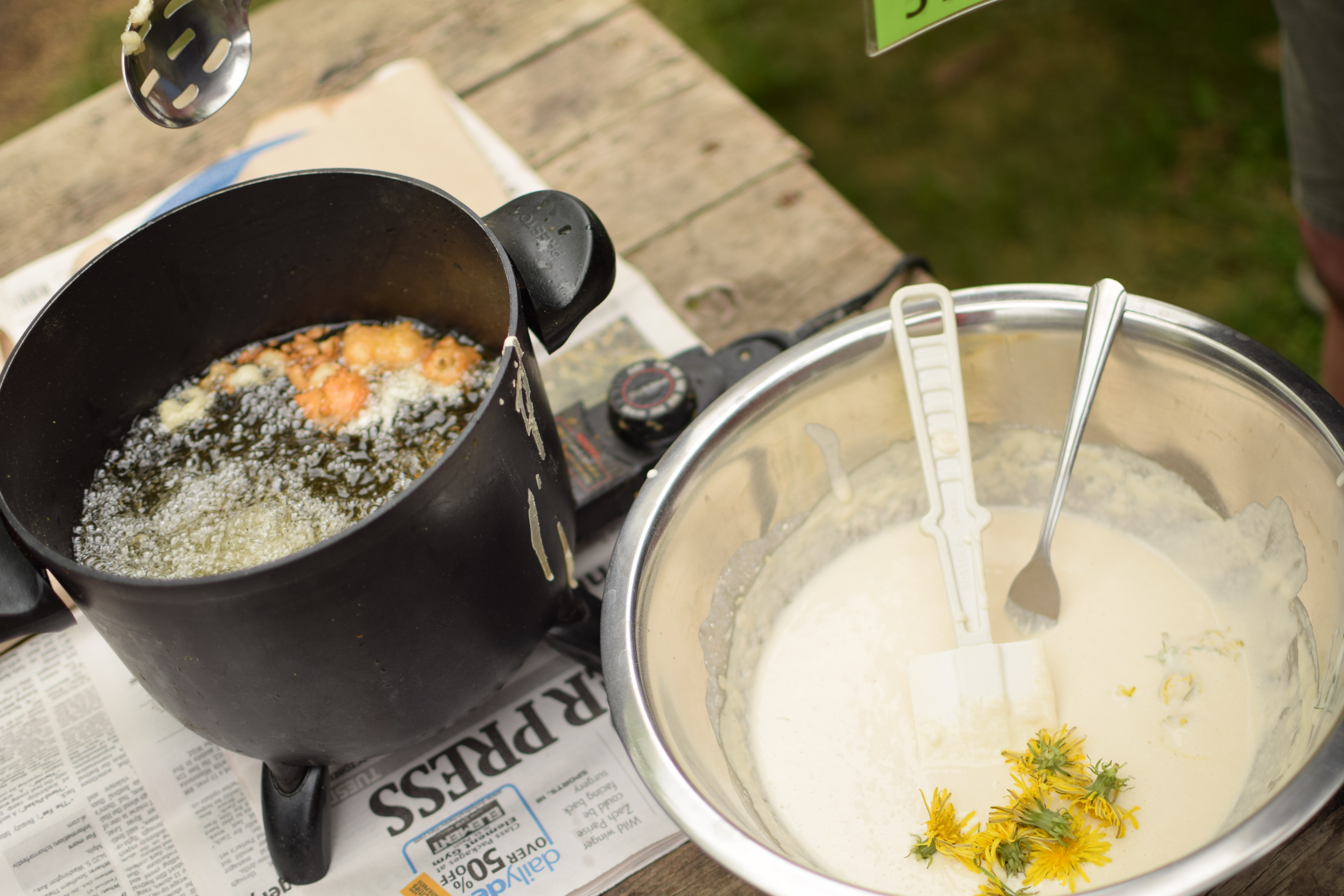
Dandelion fritters in the making at Rock the Barn.
Dandelions are delicious when dunked in pancake batter and fried (a crowd favorite at Rock the Barn). Stinging nettle leaves become a crispy snack when tossed with oil & spices and baked. And garlic mustard makes an aromatic pesto that rivals the original.
Andy is especially fond of fungi: morel, oyster, hen-of-the-woods, and more. He recently taught two Mushrooming 101 programs that brought 30 adults to Dodge. He’s only with participants for two hours, but he hopes they leave with the skills and motivation to forage on their own.
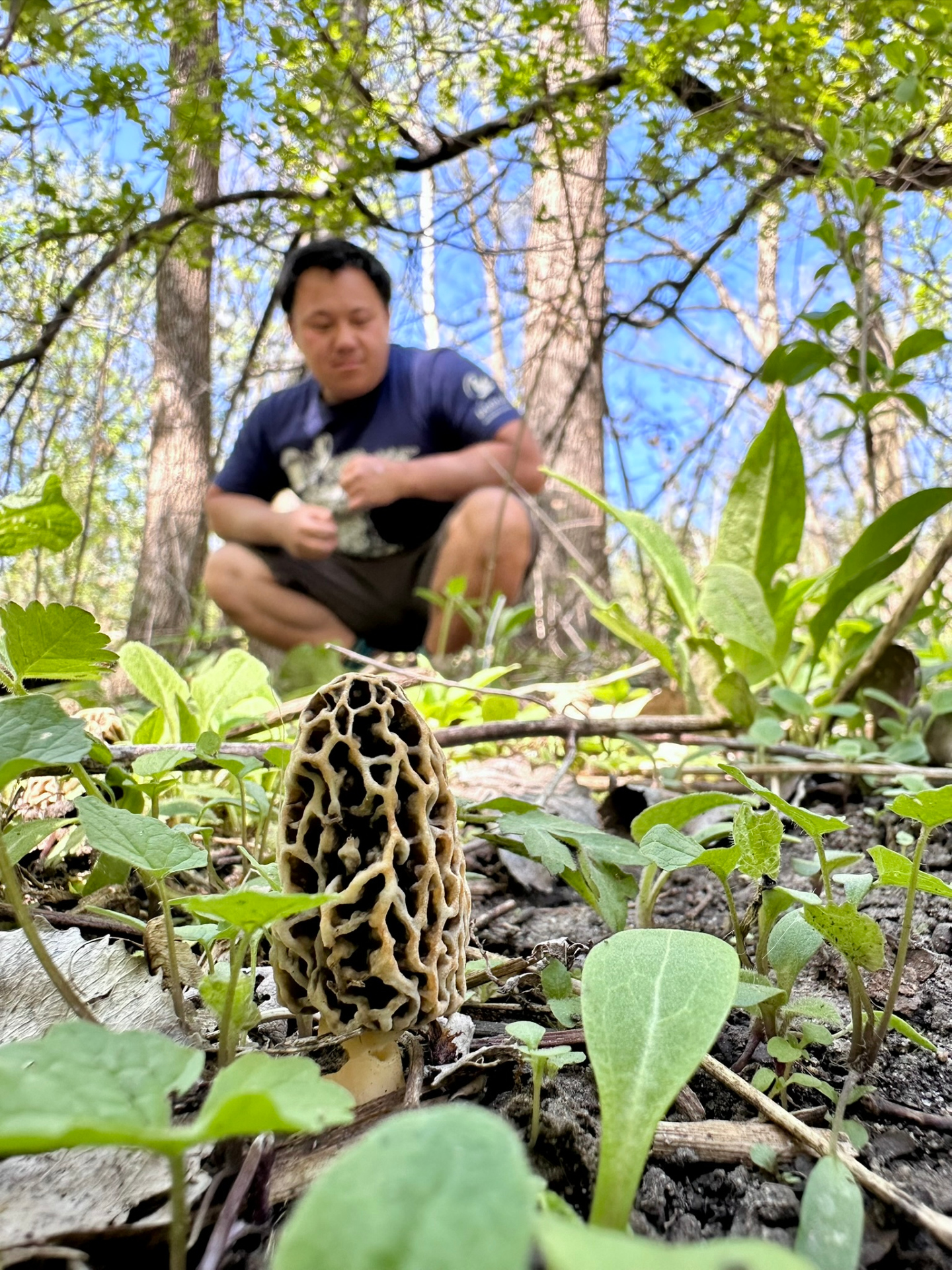
Naturalist Andy crouching by a patch of morel mushrooms, his favorite to forage in spring.
“I want to encourage people to go out into nature and recognize these plants around them,” Andy says. “There’s this whole outdoor kitchen at their fingertips—we’re just opening the door for them.”
Download four delicious wild edible recipes you can make on your own here!
This article was originally published in the Nourish Your Need for Nature Newsletter, Spring/Summer 2026.