Time spent in nature offers physical and mental benefits for people of all ages. For students who identify as neurodivergent, outdoor learning is more than beneficial—it’s transformative.
“In a traditional classroom setting, success is measured by a rubric,” Michael Harrison, Naturalist and Elementary Liaison, explains. “Outdoor learning offers new ways for neurodivergent students to feel successful and build confidence.”
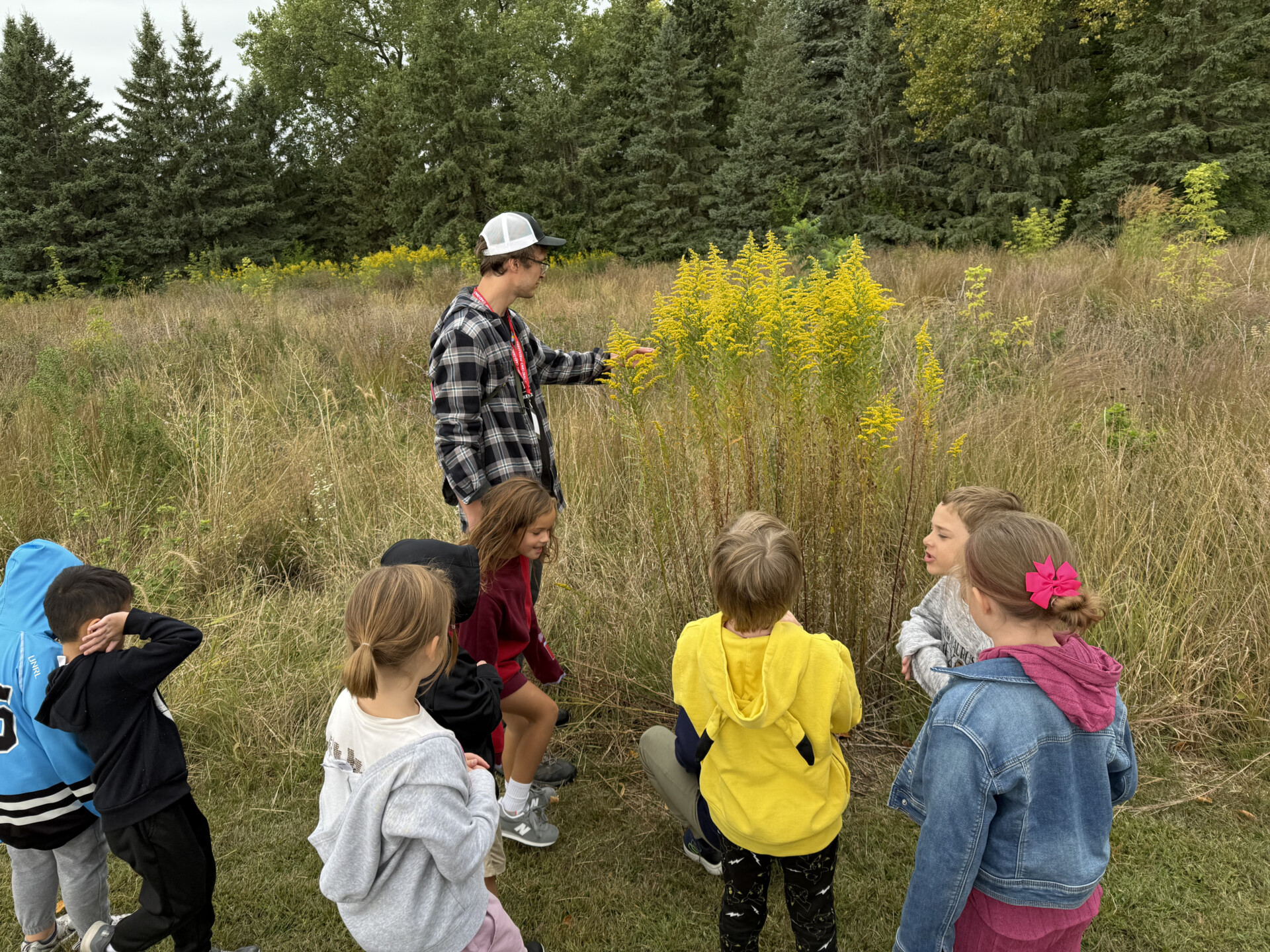
Naturalist Michael leading a group of Crestview Elementary School students on a prairie hike.
The term neurodivergent describes people whose brains work, learn, or behave differently than what’s considered “typical”. Autism spectrum disorder (ASD) and attention deficit hyperactivity disorder (ADHD) are examples of neurotypes that fall under the umbrella of neurodivergence.
About one in five children who take part in a Dodge program, whether at the nature center or in their school classroom, have higher support needs. Meeting students where they are is at the heart of how naturalists teach.
Michael has spent years supporting neurodivergent students, intentionally designing lessons to meet their needs—smaller groups, sensory-friendly activities, flexibility in participation, and the freedom to move rather than sitting at a desk. The outdoor classroom naturally complements this approach.
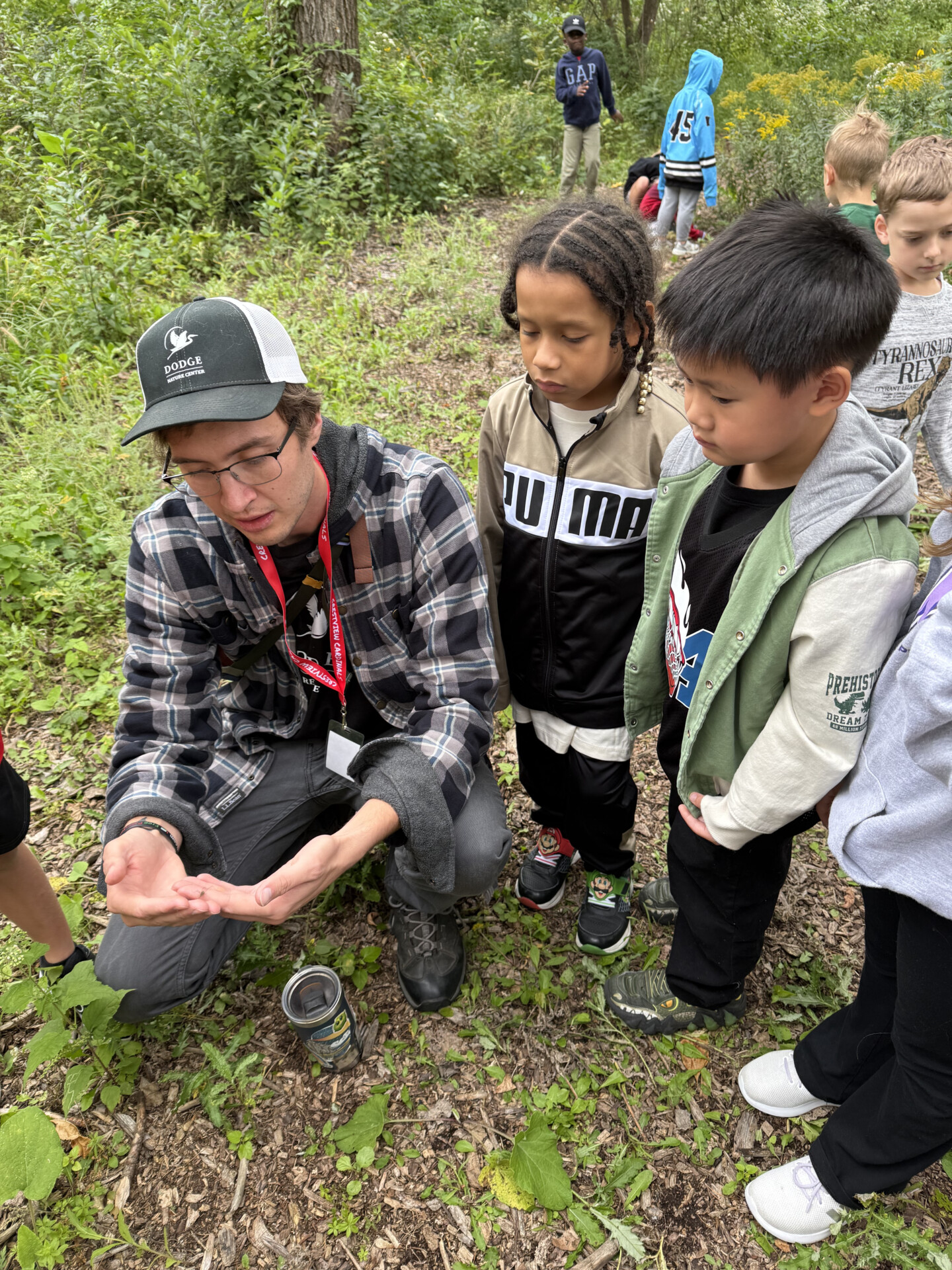
Natrualist Michael pausing to take a closer look at an insect with a group of students.
"There’s an element of choice and movement,” Michael says. “When we’re teaching outside in the real world, physically being able to do something, see something, feel something—that's where learning clicks.”
Michael identifies as neurodivergent himself; he has ADHD. For him, this is a strength in the classroom.
“I’m very honest with kids; I don’t hide it.” Michael shares. “It helps me teach with more empathy and connect with them. What you’re struggling with is something my brain struggles with, too.”
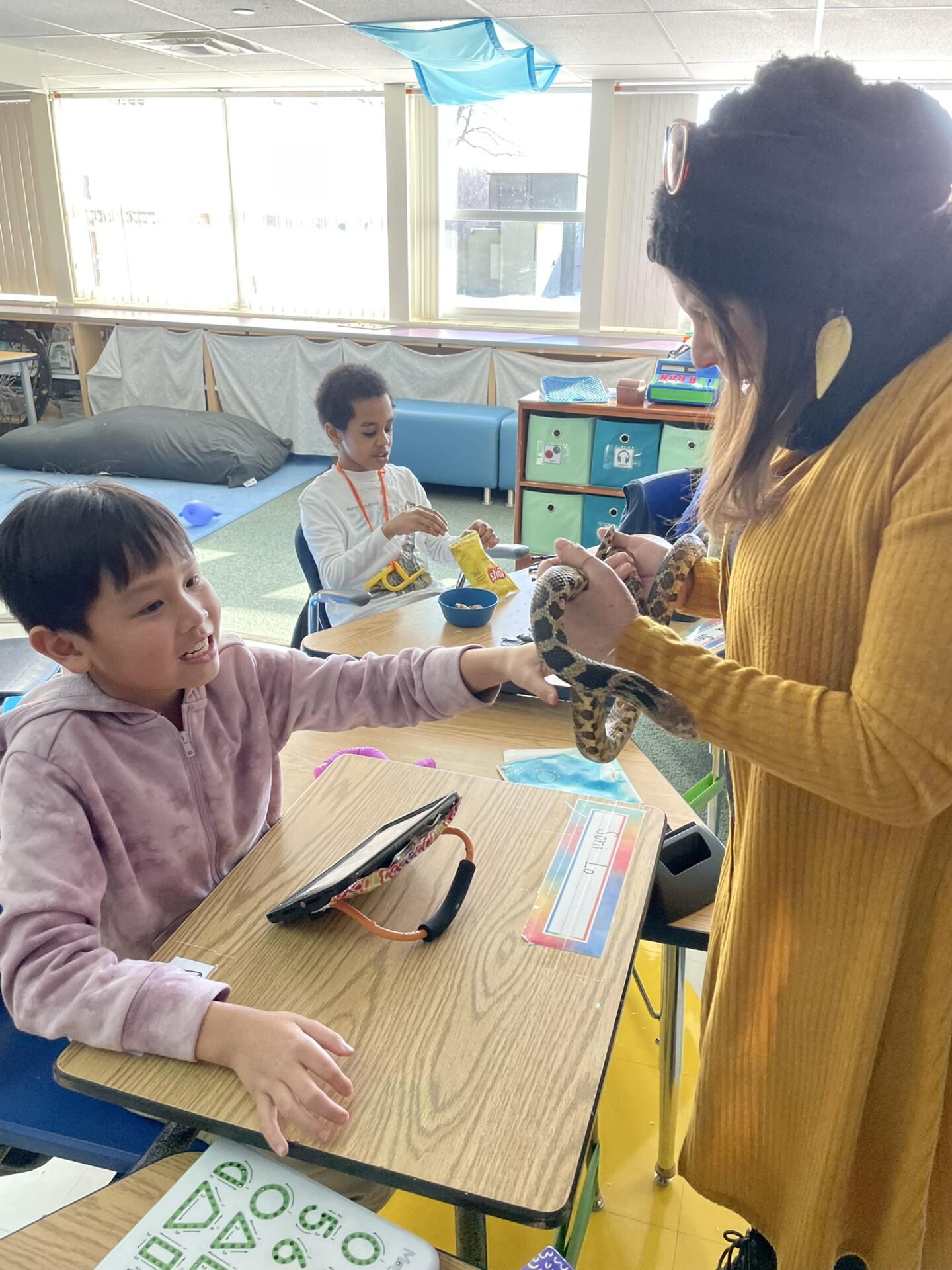
Naturalist Pam holding a snake for a student to interact with in Sara Gokey's special education classroom.
Building relationships through repeated visits is another way Dodge supports students in meaningful ways. Over in Bloomington, Naturalist Pam is doing exactly that with Special Education Teacher Sara Gokey’s classroom.
A standard Dodge outreach program is usually just a one-time visit. Sara knew her students would need more time to engage with and fully benefit from a nature program.
“Pam visits four different times which allows her to get to know the students,” Sara explains. “I can tell her about their needs and help her understand when students are ready to engage.”
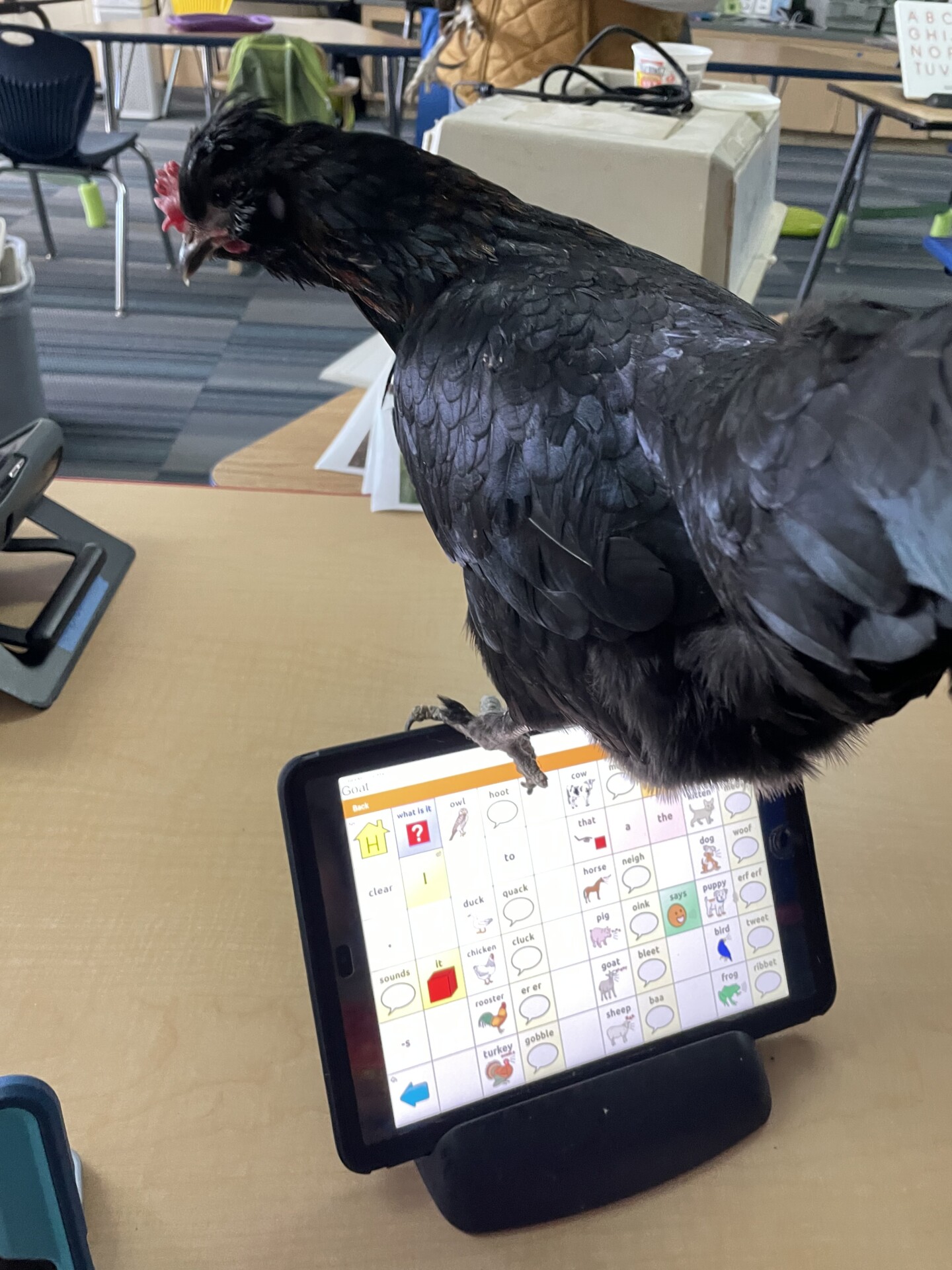
A chicken sitting on a student’s communication device in Sara Gokey’s classroom during a visit from Pam.
On each outreach, Pam introduces a new animal: turtles the first visit, frogs and salamanders the next, then snakes, and ending with chickens (a classroom favorite). The big finale is a field trip to Dodge in spring for a farm tour.
Sara sees how the groundwork laid by Pam’s visits comes to fruition on the field trip.
“The best part of working with Dodge is seeing my students grow,” Sara says. “I have my students for multiple years—some won’t enter the barn until their second or third year. When they finally do, it's a milestone.”
The impact of outdoor learning for neurodivergent students goes beyond what teachers see in a single classroom. Parent Ted Hall describes how Dodge has made a difference for his daughter.
"Our bright-eyed, adventure-seeking daughter has high energy and ADHD. Emotional regulation is tough,” Ted explains. “Dodge has helped reinforce her confidence and competence—two traits that are among the most difficult to foster in a child with ADHD. We go home with a happy, grounded girl."
This article was originally published in the Nourish Your Need for Nature Newsletter, Fall/Winter 2025.